Artificial Intelligence is not just transforming industries — it is redefining what it means to be human.
As AI becomes more integrated into society, our relationship with technology is evolving faster than ever.
The future of humanity will be deeply intertwined with intelligent systems that enhance our abilities, expand our knowledge, and influence the direction of civilization.
Here is how AI will shape human evolution in the coming decades.
🌍 1. Human Potential Amplified
AI acts as a cognitive extension of the human mind.
Instead of replacing humans, it expands what individuals can achieve.
AI enhances:
-
memory and information recall
-
problem-solving
-
creativity and design
-
communication and language
-
decision-making
-
learning speed and efficiency
Humans who work with AI will have capabilities far beyond any previous generation.
🧬 2. The Merge of Biology and Technology
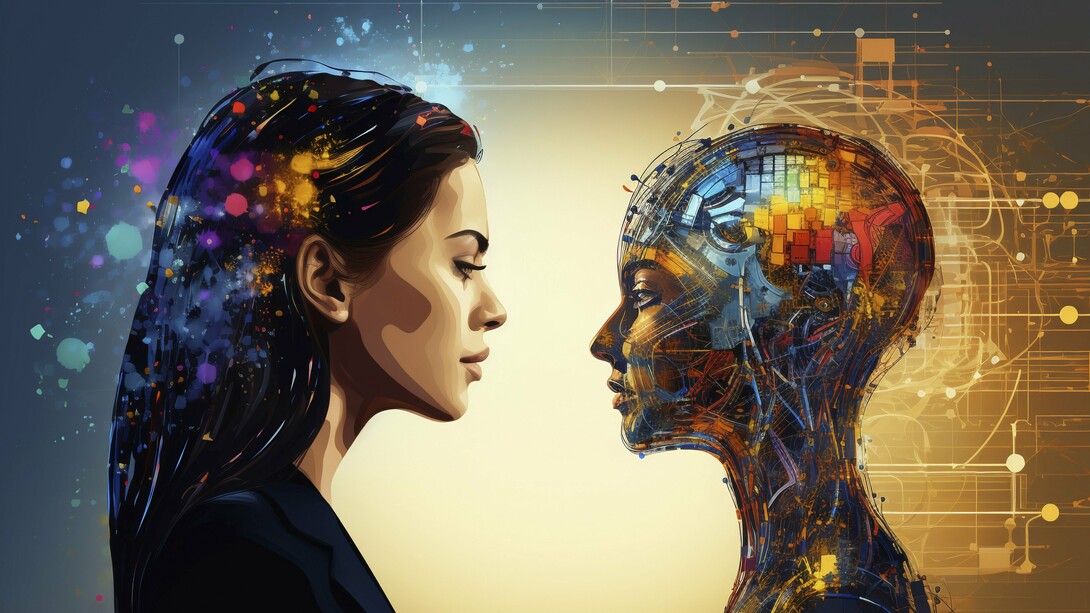
One of the most profound developments will be the integration of AI with human biology.
Possible advancements:
-
brain–computer interfaces
-
AI-powered prosthetics
-
memory enhancement devices
-
neural implants for communication
-
medical nanotechnology
These technologies will help people overcome disabilities, enhance physical abilities, and potentially unlock new forms of human experience.
🤖 3. Coexistence with Autonomous Systems
Robots and intelligent machines will handle:
-
transportation
-
logistics
-
household tasks
-
manufacturing
-
hazardous jobs
This will allow humans to focus more on creativity, relationships, and innovation — aspects of life that truly define the human spirit.
🧠 4. AI as a Global Knowledge Network
AI will give humanity access to a constantly updated, universally available source of knowledge.
This includes:
-
real-time translation between any languages
-
instant learning tools
-
deep insights from global data
-
personalized tutoring for every person
Education will become democratized on a global scale.
🏥 5. Radical Advancements in Health and Longevity
AI-driven medicine will allow people to live longer, healthier lives.
Expect breakthroughs such as:
-
predictive disease prevention
-
personalized gene therapies
-
AI-guided surgeries
-
regenerative medicine
-
early detection for almost all major illnesses
Lifespan extension will become a realistic scientific goal.
⚖️ 6. Ethical Questions and Societal Challenges
As AI becomes more powerful, humanity must confront critical questions:
-
Who controls AI?
-
How do we ensure fairness and accountability?
-
What rights do humans have in an AI-powered society?
-
How do we prevent misuse or abuse of AI systems?
The future must be guided by strong ethical principles to ensure AI benefits everyone.
💼 7. A New Definition of Work and Purpose
With AI automating many tasks, humanity will shift toward:
-
creative work
-
emotional intelligence roles
-
innovation
-
problem-solving
-
entrepreneurship
-
community and relationship-building
Work will become more meaningful, driven by passion rather than necessity.
🔮 8. A Future Built on Collaboration
The most important shift is this:
The future will be shaped by humans and AI working together, not competing.
AI will support human evolution by:
-
amplifying intelligence
-
improving health
-
reducing inequality
-
increasing global cooperation
-
accelerating innovation
Humanity will enter an era where imagination becomes the only true limit.
🏁 Conclusion: The Dawn of a New Human Era
Artificial Intelligence is not the end of humanity — it is the beginning of a new chapter.
A chapter where humans are more capable, more creative, and more connected than ever before.
Platforms like StyonArt.com show how AI empowers people today, turning imagination into reality.
And in the future, this synergy between humans and AI will define our evolution as a species.