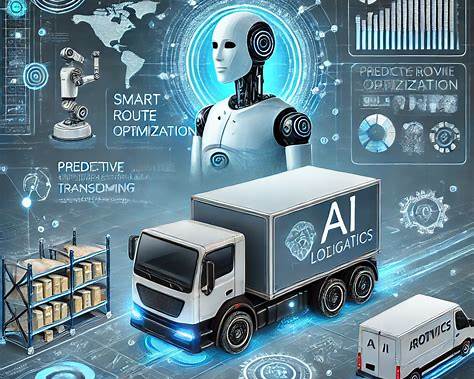
Global logistics is one of the most complex industries — and Artificial Intelligence is revolutionizing it.
From route optimization and inventory forecasting to warehouse robotics and predictive analytics, AI is making supply chains faster, smarter, and more resilient.
Here is how AI is transforming modern logistics.
🚚 1. Route Optimization and Faster Deliveries
AI calculates the most efficient routes by analyzing:
-
traffic conditions
-
weather data
-
road closures
-
delivery density
-
driver performance
This reduces travel time, fuel costs, and delivery delays.
🏭 2. Smart Warehousing and Automation
AI powers modern warehouses with:
-
autonomous robots
-
automated picking systems
-
smart conveyor belts
-
real-time inventory tracking
-
predictive restocking
Efficiency increases, errors decrease, and operations run smoothly.
📦 3. Predictive Inventory Management
AI forecasts inventory needs by studying:
-
historical sales
-
market trends
-
seasonal demand
-
economic factors
Businesses avoid overstocking and shortages, saving money and improving service.
🚛 4. Fleet Management and Maintenance
AI monitors fleet performance to predict maintenance issues before they occur.
It tracks:
-
engine health
-
tire pressure
-
fuel efficiency
-
driving behavior
This prevents breakdowns and extends vehicle lifespan.
🌐 5. Real-Time Tracking and Transparency
AI enhances visibility across the entire supply chain.
Companies gain real-time insights into:
-
shipment location
-
delivery status
-
warehouse activity
-
supplier performance
Customers benefit from accurate tracking information.
🔐 6. Fraud Detection and Security
AI identifies suspicious logistics activity such as:
-
cargo theft patterns
-
unauthorized route changes
-
digital fraud
-
inventory manipulation
Security becomes smarter and more proactive.
🧠 7. Intelligent Demand Forecasting
AI analyzes global data to predict:
-
supply chain disruptions
-
market volatility
-
consumer demand shifts
-
manufacturing bottlenecks
Businesses can adapt quickly to changes.
🤖 8. Robotics and Autonomous Delivery
AI enables new delivery methods such as:
-
autonomous delivery vehicles
-
last-mile delivery robots
-
drone delivery systems
These solutions reduce costs and boost delivery speed.
⚠️ 9. Challenges and Considerations
AI in logistics must address:
-
cybersecurity risks
-
integration with legacy systems
-
data privacy
-
high initial investment
Proper planning ensures long-term success.
🔮 Conclusion: AI Is the Engine of the Future Supply Chain
Artificial Intelligence is transforming logistics into an intelligent, automated, and highly efficient ecosystem.
The supply chains of the future will be:
-
predictive
-
adaptable
-
transparent
-
automated
-
AI-driven
Platforms like StyonArt.com prove how AI enhances workflows, creativity, and operations — and logistics is no exception.