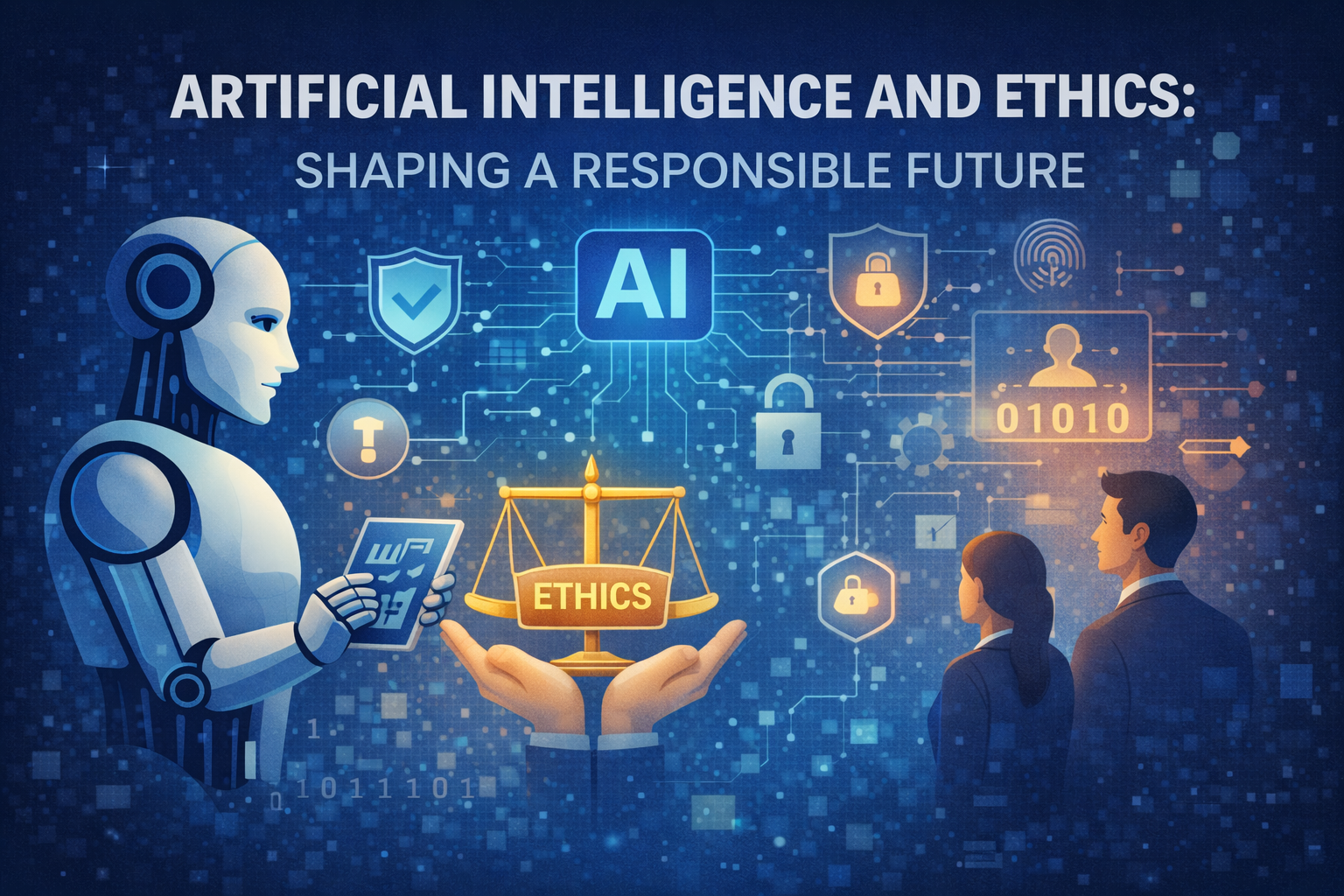
As Artificial Intelligence becomes more powerful and widespread, ethical considerations play a crucial role in shaping its future. AI systems influence decisions that affect people’s lives, making responsibility, transparency, and fairness essential.
One of the main ethical challenges of AI is bias. Algorithms learn from data, and if that data reflects social inequalities or errors, AI systems can unintentionally reinforce them. Addressing bias requires diverse data, continuous monitoring, and human oversight.
Privacy is another major concern. AI relies heavily on personal and behavioral data, raising questions about consent, security, and data ownership. Responsible AI development prioritizes data protection and transparent usage policies.
AI ethics also involve accountability. When intelligent systems make decisions—such as in finance, healthcare, or law—it must be clear who is responsible for outcomes. Human control and explainable AI models are key to maintaining trust.
A responsible future with Artificial Intelligence depends on balance. Innovation must go hand in hand with ethical principles to ensure that AI benefits society as a whole, not just technology itself.