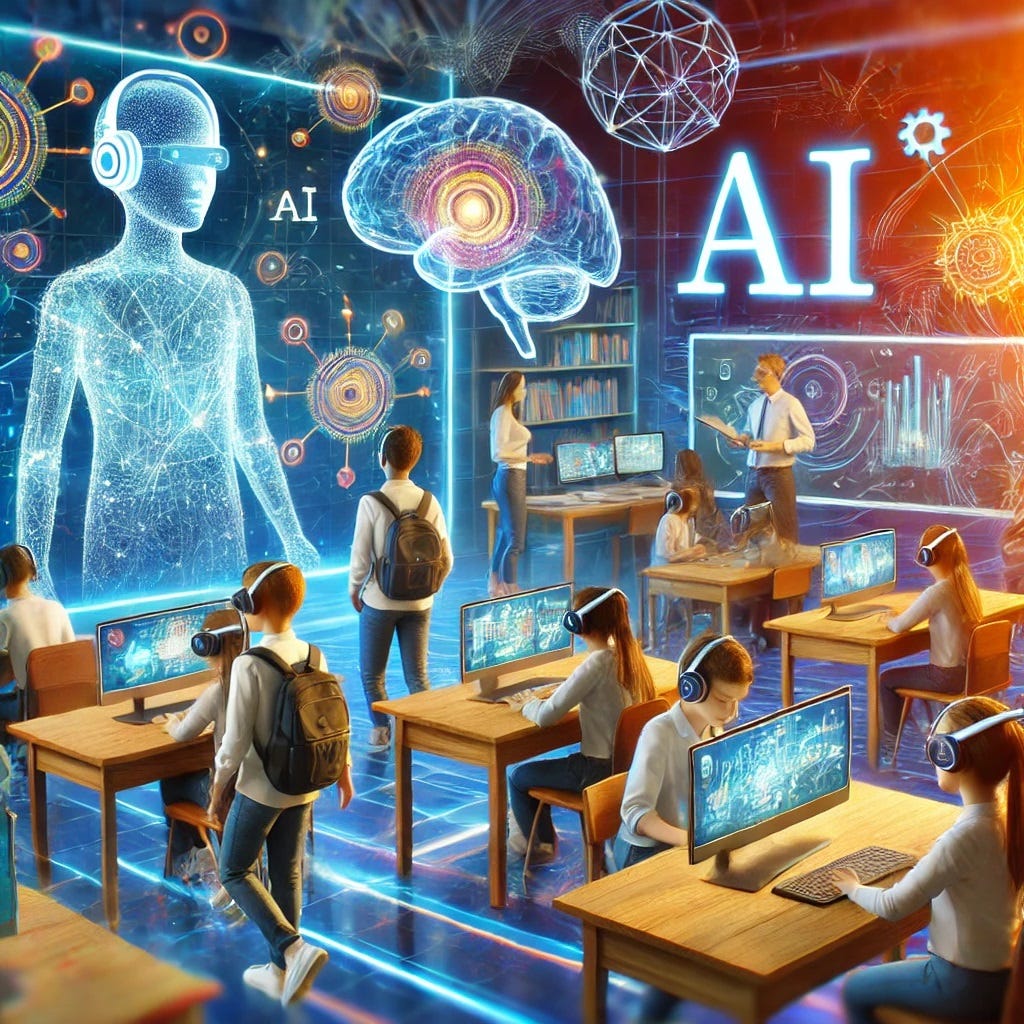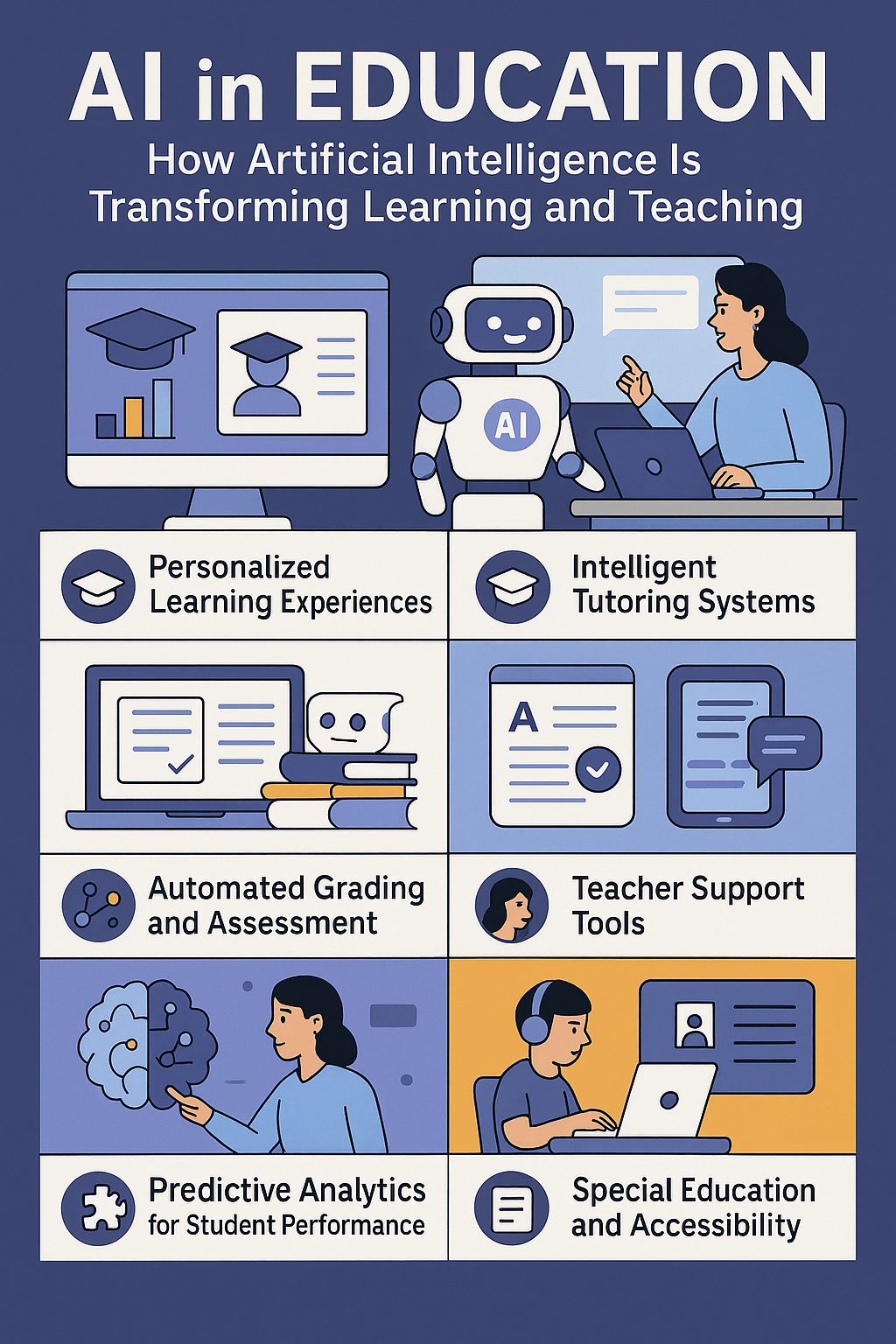
Artificial Intelligence is reshaping education by making learning more personalized, efficient, and accessible.
From adaptive learning platforms to automated grading and intelligent tutoring systems, AI is helping students and educators achieve better outcomes.
Here’s how AI is transforming modern education.
🎓 1. Personalized Learning Experiences
AI adapts learning materials based on:
-
student performance
-
learning pace
-
strengths and weaknesses
-
preferred learning styles
Every student receives a unique, tailored experience.
📚 2. Intelligent Tutoring Systems
AI tutors provide:
-
personalized explanations
-
practice exercises
-
real-time corrections
-
targeted learning pathways
Students receive 24/7 support that complements classroom teaching.
📝 3. Automated Grading and Assessment
AI speeds up evaluations by grading:
-
essays
-
quizzes
-
assignments
-
coding tasks
-
language work
Teachers save valuable time and students get instant feedback.
💬 4. Language Learning Enhancement
AI improves language learning through:
-
real-time translation
-
pronunciation correction
-
conversational simulations
-
vocabulary personalization
Learners progress faster and more naturally.
🧠 5. Predictive Analytics for Student Performance
AI predicts:
-
academic success
-
risk of dropping out
-
behavioral problems
-
engagement levels
Educators can intervene early and support student improvement.
🧑🏫 6. Teacher Support Tools
AI helps teachers by:
-
generating lesson plans
-
recommending resources
-
analyzing class performance
-
automating administrative tasks
This allows teachers to focus more on teaching and mentoring.
🧩 7. Special Education and Accessibility
AI assists students with disabilities by offering:
-
text-to-speech
-
speech-to-text
-
emotion detection
-
personalized intervention plans
Education becomes more accessible and inclusive.
🌐 8. Virtual Learning and Remote Education
AI enhances online learning platforms by:
-
adapting live lessons
-
identifying engagement levels
-
providing automated assistance
-
improving interactivity
Remote learning becomes smoother and more effective.
🧾 9. Administrative Automation
AI automates:
-
scheduling
-
admissions processing
-
student record management
-
communication workflows
Schools operate more efficiently with fewer manual tasks.
⚠️ 10. Ethical Considerations
AI in education must address:
-
data privacy
-
algorithmic fairness
-
transparency
-
digital inequality
Responsible implementation ensures trust and safety.
🔮 Conclusion: AI Is Creating the Future of Education
Artificial Intelligence is empowering students, teachers, and institutions to achieve better outcomes with less effort.
The future of education will be:
-
personalized
-
data-driven
-
inclusive
-
interactive
-
deeply AI-powered
Just as StyonArt.com uses AI to boost creativity, AI in education boosts learning potential for everyone.