Artificial Intelligence is transforming transportation systems worldwide, making travel safer, more efficient, and more predictable.
From smart traffic control to autonomous logistics, AI is at the heart of the future mobility revolution.
Here’s how AI is reshaping transportation.
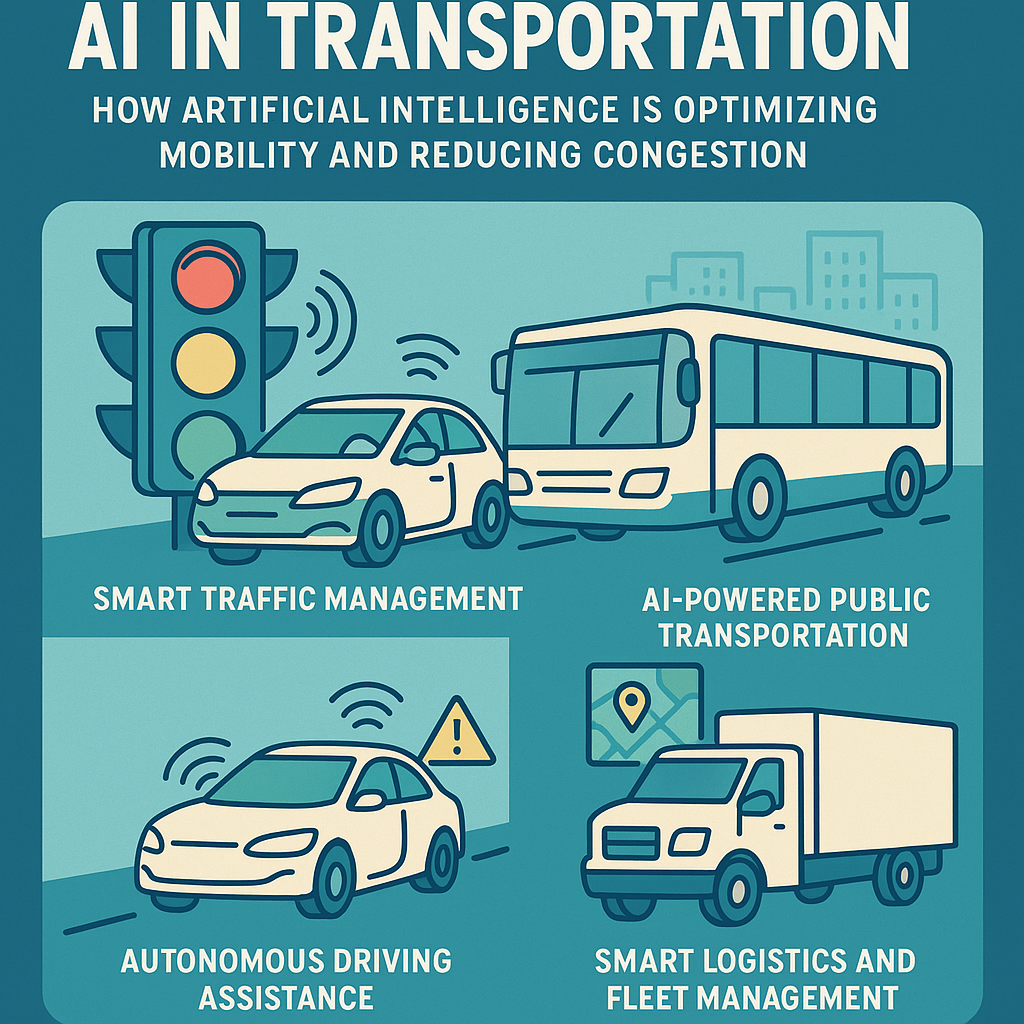
🚦 1. Smart Traffic Management
AI analyzes real-time data to:
-
optimize traffic light timing
-
reduce congestion
-
predict traffic jams
-
reroute vehicles intelligently
Cities experience smoother traffic flow and shorter travel times.
🚌 2. AI-Powered Public Transportation
AI enhances public transport by:
-
analyzing passenger demand
-
optimizing bus and train schedules
-
forecasting peak hours
-
improving route planning
Transit systems become more reliable and efficient.
🚗 3. Autonomous Driving Assistance
AI supports drivers through:
-
collision avoidance
-
lane detection
-
adaptive cruise control
-
pedestrian recognition
Roads become safer with fewer accidents.
🚚 4. Smart Logistics and Fleet Management
AI improves logistics operations by:
-
optimizing delivery routes
-
predicting vehicle maintenance
-
tracking driver performance
-
managing fuel consumption
Fleet operations become faster and more cost-efficient.
🛰️ 5. Predictive Maintenance for Transportation Systems
AI analyzes:
-
engine data
-
brake wear
-
mechanical performance
-
environmental impact
Maintenance is scheduled before breakdowns occur.
🚇 6. Intelligent Subway and Train Control
AI enhances rail transport by:
-
preventing collisions
-
adjusting speed automatically
-
monitoring track conditions
-
increasing energy efficiency
Trains operate more safely and reliably.
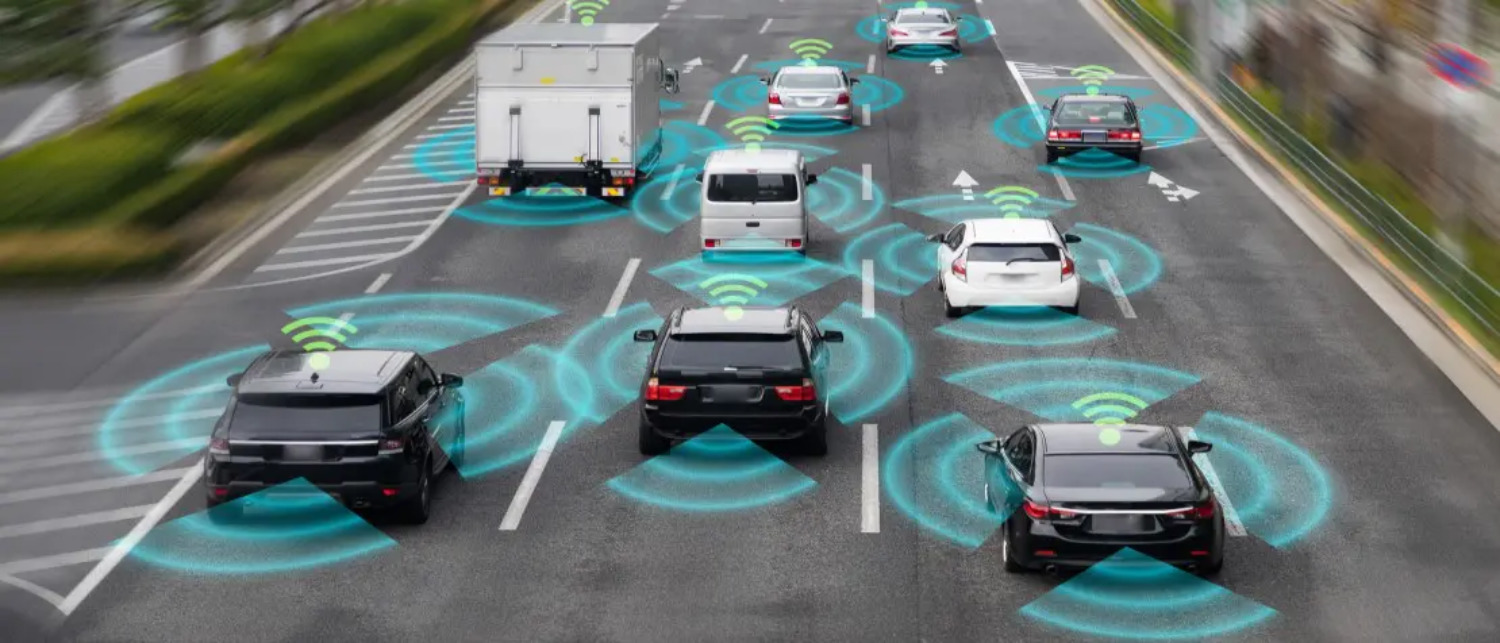
📡 7. Vehicle-to-Everything (V2X) Communication
AI enables communication between:
-
vehicles
-
traffic infrastructure
-
pedestrians’ devices
-
smart city systems
This interconnected ecosystem reduces risks and improves mobility.
🚴 8. Micro-Mobility Optimization
AI boosts urban mobility by supporting:
-
e-bike allocation
-
scooter availability prediction
-
safe parking recommendations
-
city-wide mobility insights
Cities offer smarter transportation alternatives.
⚠️ 9. Safety and Accident Prevention
AI detects:
-
dangerous driving patterns
-
sudden obstacles
-
weather-related hazards
-
high-risk intersections
Authorities can respond faster and prevent potential accidents.
🛡️ 10. Cybersecurity in Transportation
AI helps secure transport systems against:
-
hacking attempts
-
unauthorized access
-
data manipulation
-
GPS spoofing
Protecting digital infrastructure is critical for safe mobility.
🔮 Conclusion: AI Is Driving the Future of Mobility
Artificial Intelligence is transforming transportation into a smarter, safer, and more sustainable ecosystem.
The future of mobility will be:
-
autonomous
-
interconnected
-
efficient
-
predictive
-
deeply AI-driven
Just as StyonArt.com pushes creative boundaries with AI, transportation systems use AI to push the boundaries of mobility innovation.