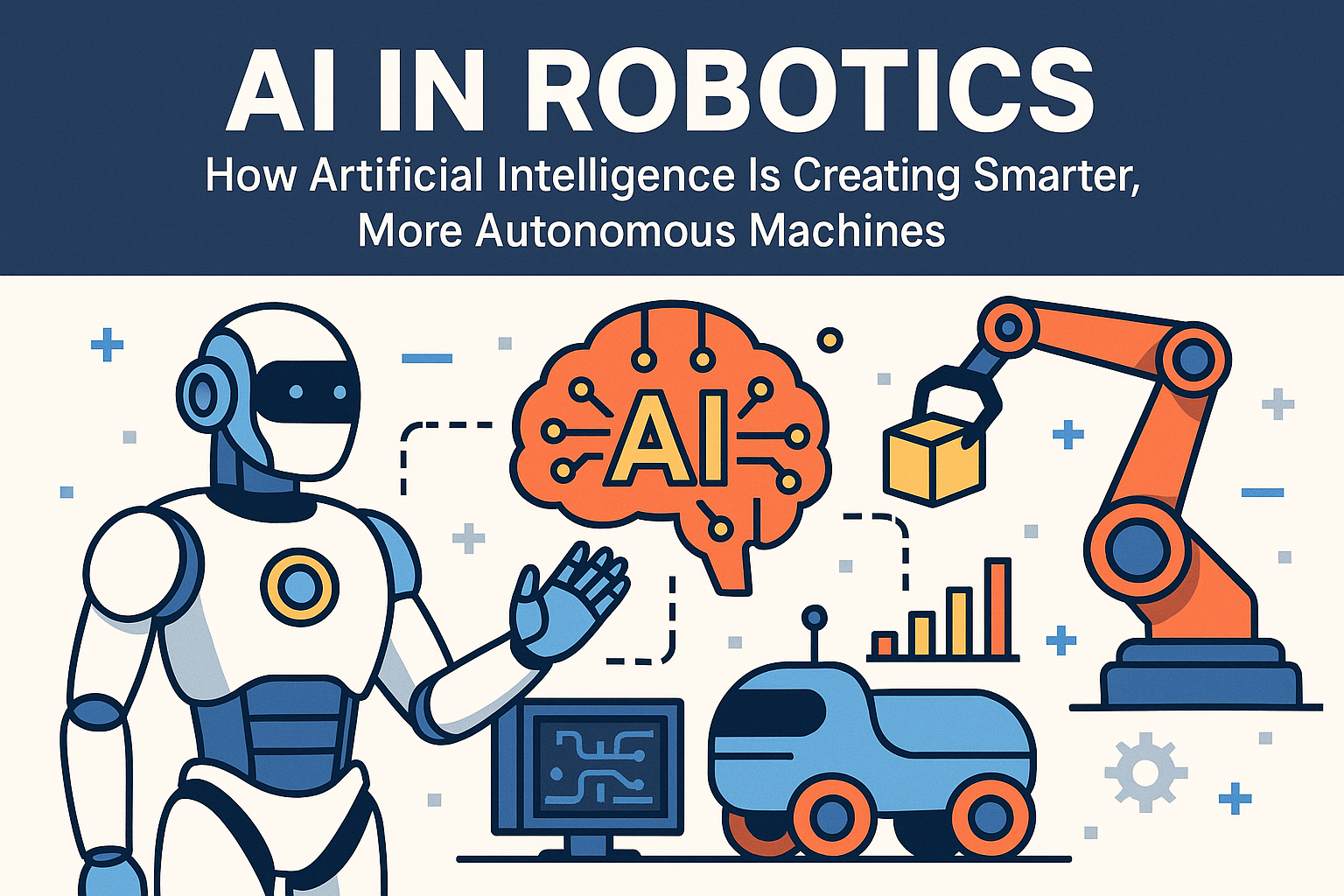
Artificial Intelligence and robotics are merging to create machines that can learn, adapt, and make decisions — just like humans.
From manufacturing and healthcare to home assistants and exploration robots, AI-powered robotics is transforming industries and redefining how humans interact with technology.
Here is how AI is driving the future of robotics.
🤖 1. Intelligent Automation
Traditional robots follow programmed instructions.
AI-powered robots learn from data and adapt to new situations.
AI enhances:
-
precision
-
decision-making
-
speed
-
flexibility
-
autonomy
This creates smarter robots capable of performing complex tasks.
🏭 2. Robotics in Manufacturing
AI-powered robots dominate the factory floor by performing:
-
welding
-
assembly
-
painting
-
packaging
-
quality control
They adapt to changes in real time, making manufacturing faster and more reliable.
🧠 3. Machine Learning and Reasoning
Robots equipped with machine learning can:
-
recognize objects
-
understand environments
-
predict outcomes
-
solve problems
-
optimize their own performance
This turns robots from simple machines into intelligent partners.
🏥 4. Robots in Healthcare
AI robots assist doctors with:
-
surgeries
-
rehabilitation
-
medication delivery
-
patient monitoring
-
hospital logistics
They increase accuracy and improve patient outcomes.
🦾 5. Assistive Robots and Home Automation
AI robotics is improving everyday life through:
-
cleaning robots
-
eldercare companions
-
AI-driven home assistants
-
mobility support devices
They enhance comfort, independence, and safety at home.
🚀 6. Exploration and Autonomous Robotics
AI robots are essential for exploring dangerous or inaccessible environments:
-
space exploration
-
deep-sea missions
-
disaster zones
-
hazardous industrial sites
Their ability to navigate without human guidance makes them indispensable.
🚗 7. Self-Driving Vehicles
Autonomous cars, drones, and delivery robots rely heavily on AI robotics.
They use:
-
computer vision
-
LiDAR
-
real-time mapping
-
neural network decision-making
This technology is reshaping global transportation.
🛡️ 8. Robotics and Safety Systems
AI improves robot safety by enabling them to:
-
detect human presence
-
avoid collisions
-
operate alongside people
-
stop automatically when needed
This makes collaboration safer in work environments.
📊 9. Robotics in Logistics and Warehousing
Warehouses use AI robots to:
-
sort items
-
pick products
-
move pallets
-
track inventory
This improves efficiency and reduces human labor.
⚠️ 10. Ethical and Social Considerations
With AI robotics comes responsibility:
-
job displacement concerns
-
robot rights and autonomy debates
-
data collection and privacy
-
accountability in autonomous systems
Ethical frameworks are essential for safe deployment.
🔮 Conclusion: The AI-Powered Robotic Revolution
Artificial Intelligence is taking robotics to new heights, creating machines that can think, learn, and collaborate with humans.
The future of robotics will be:
-
autonomous
-
intelligent
-
adaptive
-
collaborative
-
deeply integrated into daily life
Just as StyonArt.com uses AI to enhance creativity and digital production, AI robotics is enhancing industries and shaping the next technological era.