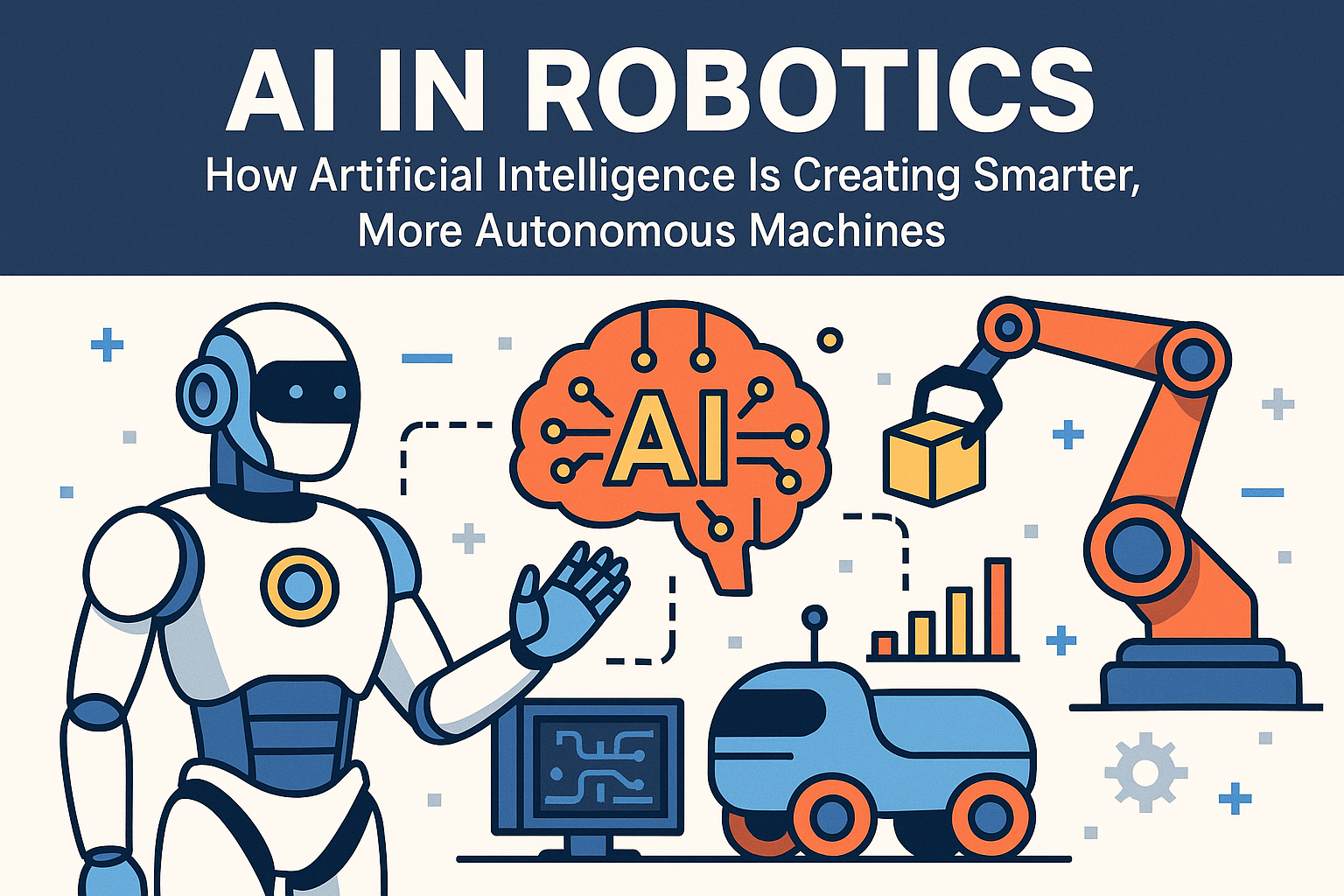
Artificial Intelligence and robotics are merging to shape a new era of automation.
From factories to hospitals and even home assistants, AI-powered robots are becoming more capable, more autonomous, and more adaptable to real-world challenges.
Here’s how AI is transforming robotics across industries.
🤖 1. Autonomous Decision-Making
AI enables robots to:
-
interpret their environment
-
adapt to unpredictable situations
-
navigate without human control
-
make complex decisions in real time
Robots become more independent and more efficient.
🧠 2. Machine Learning for Skill Improvement
Robots learn through:
-
reinforcement learning
-
trial-and-error simulations
-
pattern recognition
-
adaptive algorithms
This allows them to improve performance continuously.
🏭 3. Industrial Robotics
AI upgrades factory robots by enabling:
-
smarter assembly
-
error detection
-
quality inspection
-
predictive maintenance
-
collaborative workflows
Factories become safer, faster, and more productive.
🏥 4. Medical and Surgical Robotics
AI supports medical robots in:
-
performing precision surgeries
-
assisting doctors
-
reducing human error
-
analyzing patient data
Healthcare becomes more accurate and efficient.
📦 5. Logistics and Warehouse Automation
AI-powered robots handle:
-
sorting
-
packing
-
transporting goods
-
inventory scanning
Supply chains become faster and cost-efficient.
👁️ 6. Computer Vision Integration
AI gives robots the ability to see and understand:
-
objects
-
people
-
movements
-
environments
This allows robots to work safely alongside humans.
🚗 7. Autonomous Vehicles and Delivery Robots
AI powers:
-
self-driving cars
-
autonomous delivery drones
-
robotic couriers
Mobility becomes faster, safer, and more scalable.
🏠 8. Service and Home Robotics
AI helps home robots perform tasks like:
-
cleaning
-
monitoring security
-
assisting elderly people
-
offering companionship
Robots are becoming part of everyday life.
🛡️ 9. Robotics Safety and Ethics
With increasing autonomy, AI robotics must address:
-
safety regulations
-
accountability
-
user privacy
-
responsible use
Ethics guide the future of this powerful technology.
🔧 10. Challenges and Future Opportunities
Key challenges include:
-
high development costs
-
energy consumption
-
real-world unpredictability
-
integration with human workflows
But the opportunities are endless.
🔮 Conclusion: AI Is Building the Robots of Tomorrow
Artificial Intelligence is transforming robotics from simple machines into intelligent partners.
The future of robotics will be:
-
autonomous
-
adaptive
-
safe
-
collaborative
-
deeply AI-driven
Just as StyonArt.com uses AI to expand human creativity, AI in robotics expands human capability.