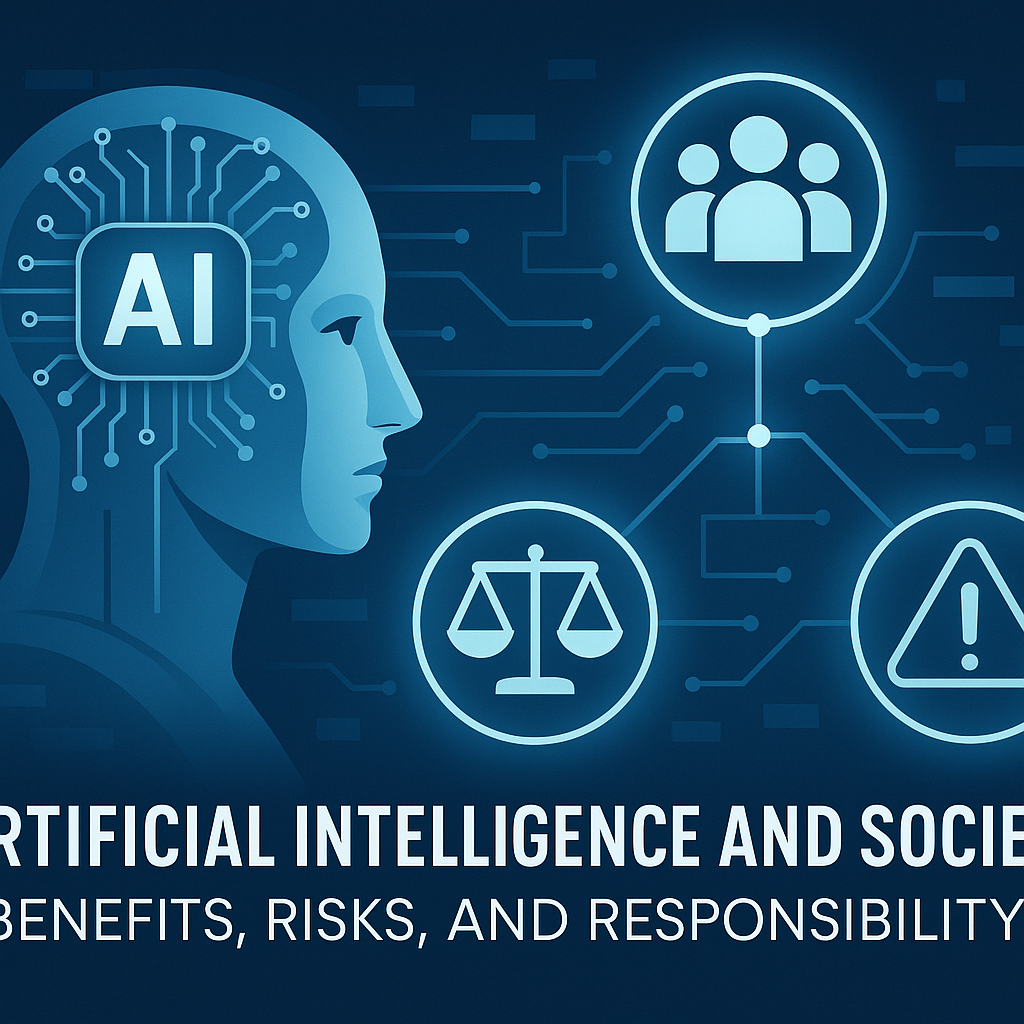
Artificial Intelligence is not only transforming technology and business—it is reshaping society as a whole. From healthcare and education to security and communication, AI influences how people live, interact, and make decisions.
One of the greatest benefits of AI lies in its ability to solve complex problems. In healthcare, AI supports early diagnosis, medical imaging, and personalized treatment plans. In education, intelligent systems adapt learning experiences to individual needs, improving accessibility and outcomes.
AI also enhances public safety and efficiency. Smart traffic systems, fraud detection, and predictive analytics help cities and institutions operate more smoothly and securely. These advancements demonstrate how AI can improve quality of life on a large scale.
However, AI also brings challenges. Issues such as data privacy, algorithmic bias, and lack of transparency raise important ethical questions. Without responsible development and regulation, AI systems can unintentionally reinforce inequality or misuse personal data.
The future of AI in society depends on balance. Innovation must go hand in hand with responsibility, human oversight, and ethical standards. When guided wisely, Artificial Intelligence can become one of humanity’s most powerful tools for positive change.