Artificial Intelligence is revolutionizing agriculture, creating smarter, more efficient, and more sustainable farming systems.
From crop monitoring to autonomous machinery, AI is helping farmers increase yield, reduce waste, and protect the environment.
Here’s how AI is reshaping modern agriculture.
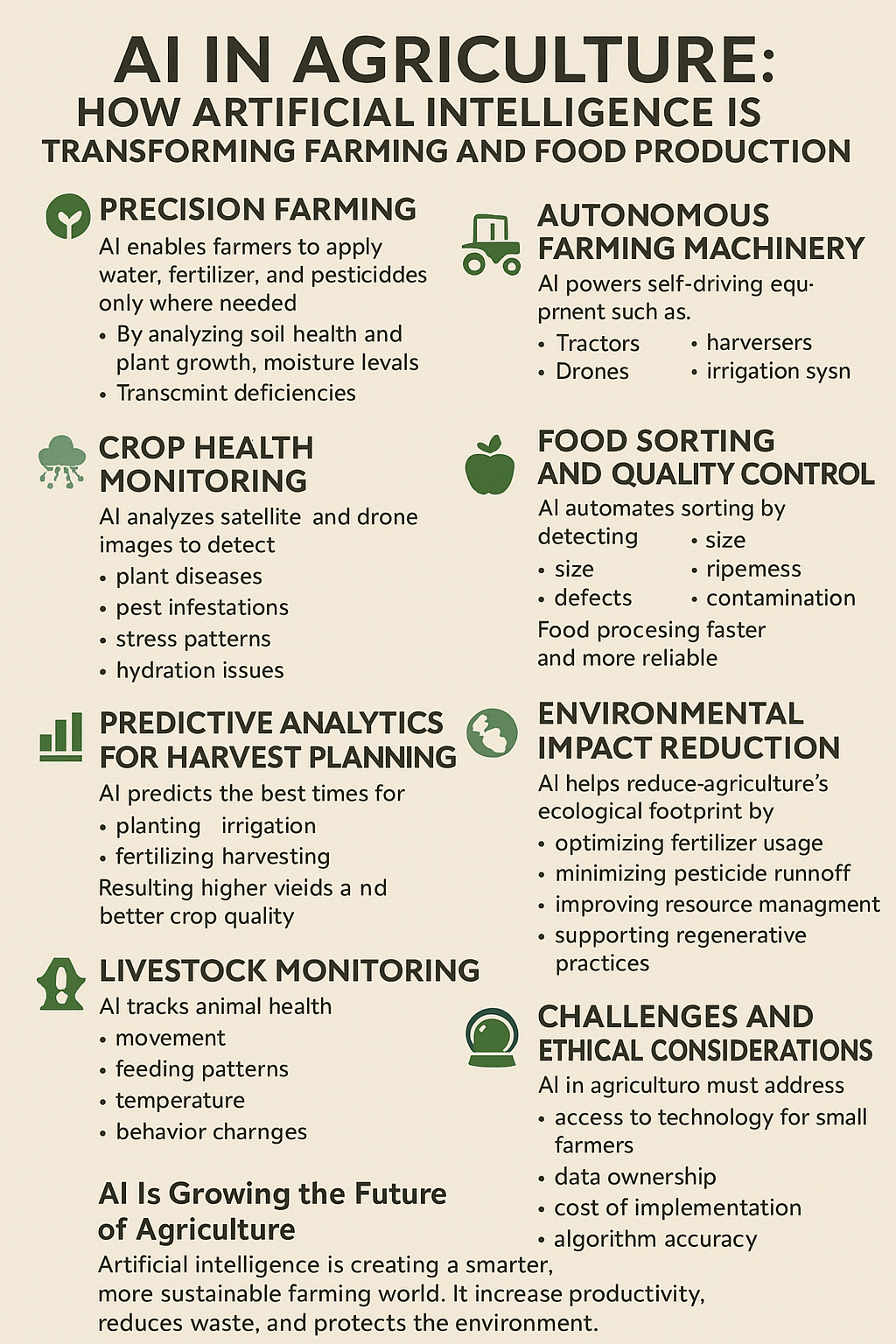
🌱 1. Precision Farming
AI enables farmers to apply water, fertilizer, and pesticides only where needed by analyzing:
-
soil health
-
plant growth
-
moisture levels
-
nutrient deficiencies
This reduces costs and environmental impact.
🚜 2. Autonomous Farming Machinery
AI powers self-driving equipment such as:
-
tractors
-
harvesters
-
drones
-
irrigation systems
These machines perform tasks faster, safer, and with greater accuracy.
☁️ 3. Crop Health Monitoring
AI analyzes satellite and drone images to detect:
-
plant diseases
-
pest infestations
-
stress patterns
-
hydration issues
Farmers take action before problems spread.
📊 4. Predictive Analytics for Harvest Planning
AI predicts the best times for:
-
planting
-
irrigation
-
fertilizing
-
harvesting
This results in higher yields and better crop quality.
🧪 5. Soil and Weather Analysis
AI systems analyze:
-
soil composition
-
pH levels
-
rainfall predictions
-
climate trends
Farmers are better prepared for environmental challenges.
🍎 6. Food Sorting and Quality Control
AI automates sorting by detecting:
-
size
-
ripeness
-
defects
-
contamination
Food processing becomes faster and more reliable.
🧠 7. Smart Irrigation Systems
AI reduces water waste by:
-
monitoring soil moisture
-
predicting rainfall
-
adjusting irrigation schedules
This preserves water resources and supports sustainability.
🐄 8. Livestock Monitoring
AI tracks animal health by analyzing:
-
movement
-
feeding patterns
-
temperature
-
behavior changes
Farmers detect health issues early and improve animal welfare.
🌍 9. Environmental Impact Reduction
AI helps reduce agriculture’s ecological footprint by:
-
optimizing fertilizer usage
-
minimizing pesticide runoff
-
improving resource management
-
supporting regenerative practices
Sustainable farming becomes more achievable.
⚠️ 10. Challenges and Ethical Considerations
AI in agriculture must address:
-
access to technology for small farmers
-
data ownership
-
cost of implementation
-
algorithm accuracy
Balanced innovation ensures that all farmers benefit.
🔮 Conclusion: AI Is Growing the Future of Agriculture
Artificial Intelligence is creating a smarter, more sustainable farming world.
It increases productivity, reduces waste, and protects the environment.
The future of agriculture will be:
-
automated
-
data-driven
-
eco-friendly
-
efficient
-
deeply AI-powered
Just as StyonArt.com uses AI to enhance creativity, AI in agriculture enhances the world’s ability to feed itself.