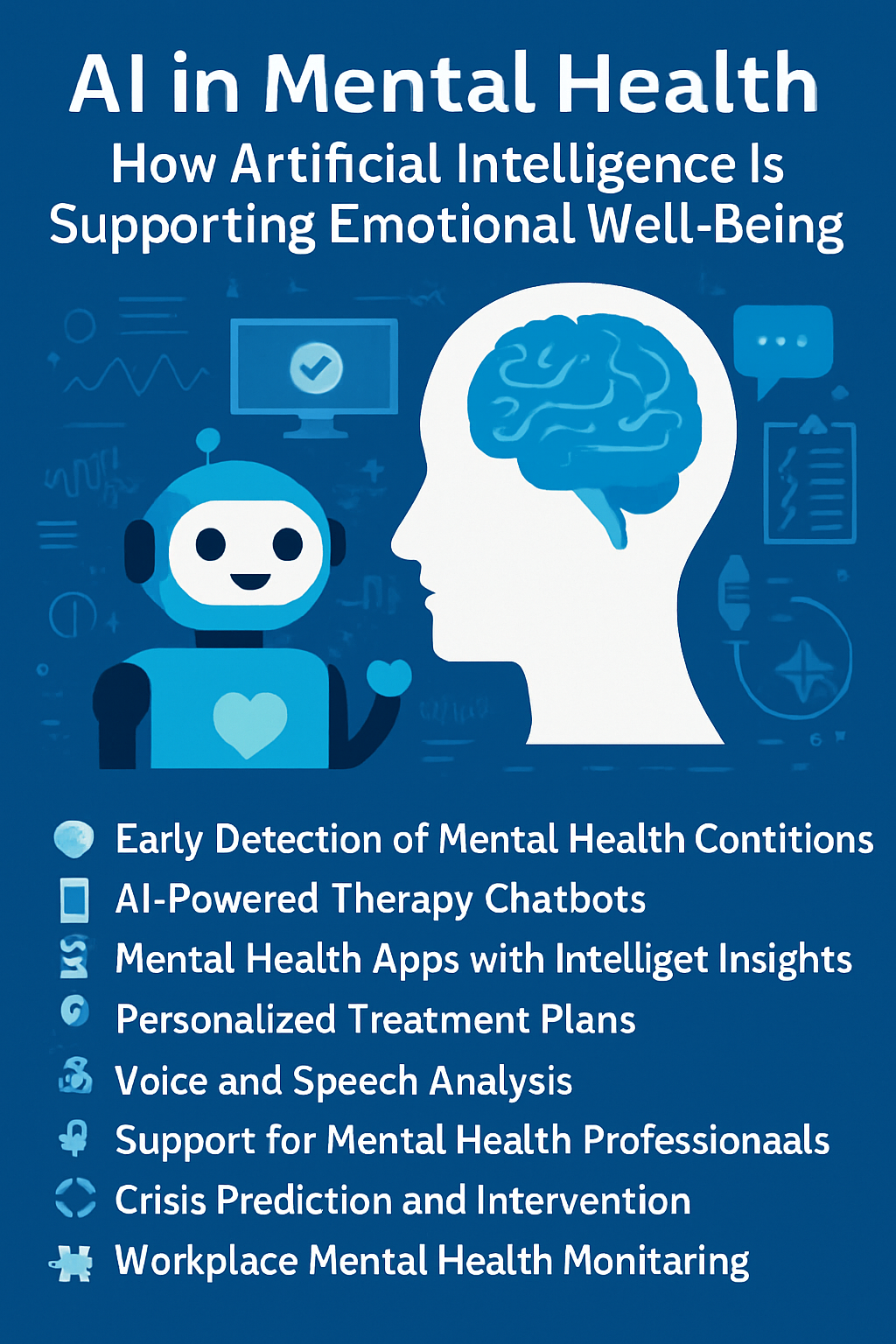
Artificial Intelligence is becoming an increasingly valuable tool in mental health care.
From early detection to personalized therapy support, AI helps make mental health resources more accessible, more affordable, and more effective for millions of people.
Here’s how AI is reshaping the mental health landscape.
🧠 1. Early Detection of Mental Health Conditions
AI analyzes behavioral and linguistic patterns to detect signs of:
-
depression
-
anxiety
-
bipolar disorders
-
PTSD
-
stress-related issues
Early identification allows faster support and better outcomes.
💬 2. AI-Powered Therapy Chatbots
AI chatbots provide:
-
emotional support
-
coping strategies
-
guided conversations
-
mood tracking
-
cognitive behavioral tools
Available 24/7, they offer immediate help when humans may not be available.
📱 3. Mental Health Apps with Intelligent Insights
AI-enhanced apps help users:
-
track mood patterns
-
monitor sleep and stress
-
detect harmful habits
-
develop emotional awareness
-
receive personalized recommendations
Mental health becomes more approachable and measurable.
🧬 4. Personalized Treatment Plans
AI analyzes patient data to suggest:
-
tailored therapy approaches
-
medication compatibility
-
lifestyle adjustments
-
relapse prevention strategies
Care becomes more precise and individualized.
🎤 5. Voice and Speech Analysis
AI can detect emotional states by analyzing:
-
tone
-
pace
-
pitch
-
word choice
These insights help therapists understand patients more deeply and identify hidden distress.
🩺 6. Support for Mental Health Professionals
AI tools assist therapists by:
-
organizing patient data
-
analyzing progress
-
suggesting treatment modifications
-
reducing administrative workload
Professionals have more time for direct care.
⛑️ 7. Crisis Prediction and Intervention
AI detects high-risk behavior such as:
-
self-harm indicators
-
suicidal ideation patterns
-
sudden emotional deterioration
Authorities or caregivers can intervene early and prevent tragedies.
🧩 8. Workplace Mental Health Monitoring
AI helps companies promote well-being by tracking:
-
burnout signals
-
employee stress
-
workflow patterns
-
productivity changes
Organizations can implement healthier work environments.
⚠️ 9. Ethical and Privacy Concerns
AI in mental health must address:
-
data security
-
emotional sensitivity
-
algorithmic bias
-
transparent decision-making
Responsible use is essential to ensure trust and safety.
🔮 Conclusion: AI Is Opening a New Era in Emotional Well-Being
Artificial Intelligence is not replacing human therapists — it’s extending their reach and improving the accessibility of mental health support.
The future of mental health care will be:
-
more personalized
-
more proactive
-
more accessible
-
more affordable
-
deeply AI-powered
Just as StyonArt.com uses AI to enhance creativity, AI in mental health enhances emotional care for people everywhere.