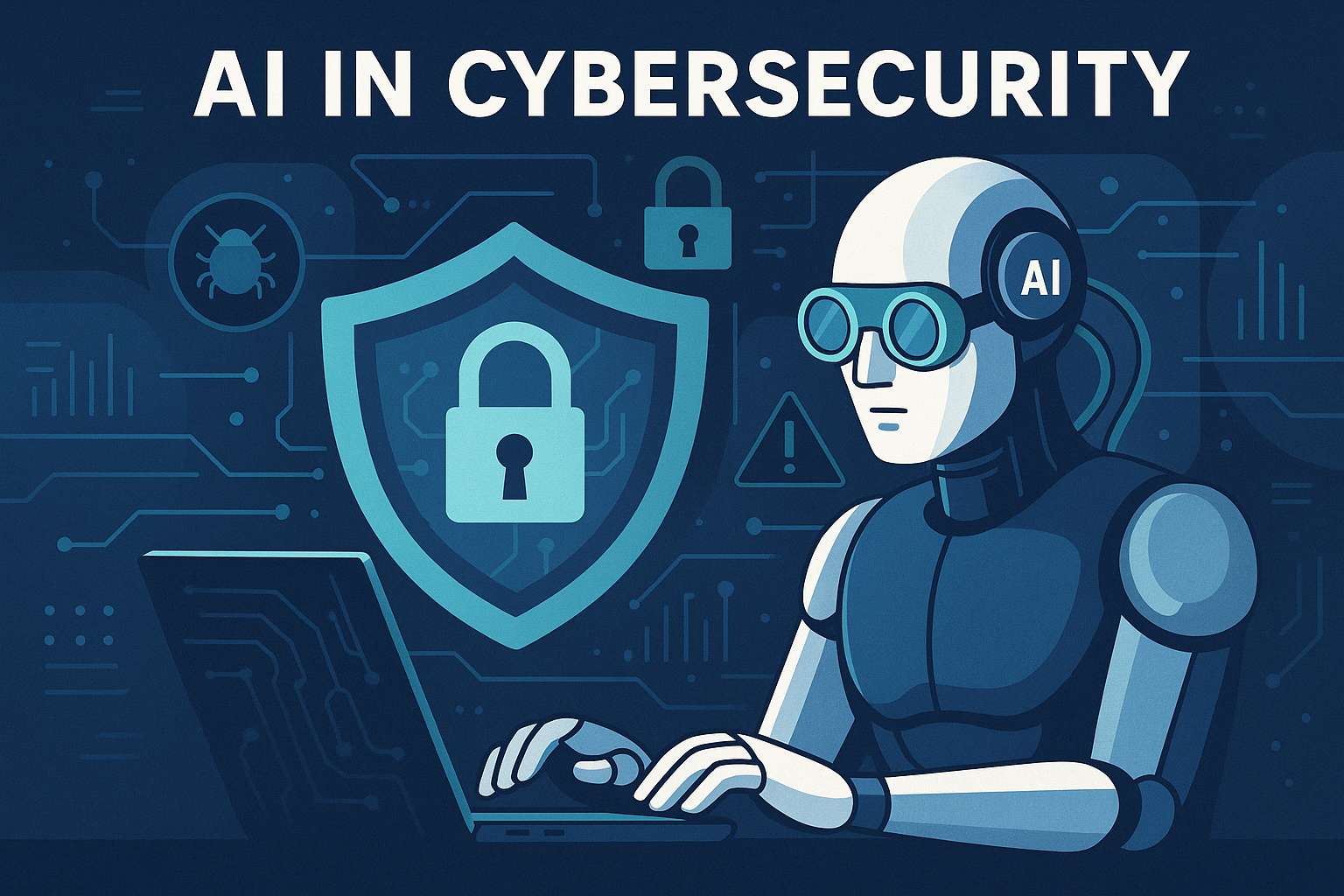
As cyber threats grow more advanced, Artificial Intelligence is becoming one of the most powerful tools for protecting digital systems.
AI detects attacks faster, analyzes massive datasets, and prevents security breaches before they happen.
Here’s how AI is transforming cybersecurity across industries.
🔐 1. Real-Time Threat Detection
AI monitors networks continuously to identify:
-
suspicious behavior
-
unauthorized access
-
malware patterns
-
anomaly spikes
-
unusual traffic flows
Threats that traditionally took hours to detect are now found in seconds.
🧠 2. Predictive Cyber Defense
AI predicts future attacks by analyzing:
-
historical attack data
-
hacker behavior
-
system vulnerabilities
-
global threat trends
This allows organizations to strengthen defenses before attacks occur.
🛡️ 3. Automated Response Systems
When a threat is detected, AI can automatically:
-
block malicious IPs
-
isolate infected devices
-
shut down compromised accounts
-
trigger alerts
-
activate backup protocols
Automation minimizes damage and accelerates recovery.
🧬 4. Behavioral Biometrics
AI improves identity verification through:
-
typing patterns
-
mouse movement
-
navigation behavior
-
device fingerprints
This adds a powerful layer of authentication that is difficult to bypass.
🐛 5. AI in Malware Detection
AI identifies malware by analyzing:
-
file structure
-
behavior simulations
-
code anomalies
-
execution patterns
It detects new threats even before antivirus signatures exist.
📊 6. Risk Assessment and Security Audits
AI evaluates:
-
system vulnerabilities
-
misconfigurations
-
access permissions
-
data exposure risks
Businesses receive actionable insights to improve their security posture.
📱 7. Cybersecurity for Mobile Devices
AI protects smartphones from:
-
phishing attempts
-
harmful apps
-
network attacks
-
data theft
-
fraudulent activity
Mobile users stay safer without manual checks.
🏦 8. Fraud Prevention in Financial Systems
AI detects fraudulent behavior such as:
-
abnormal transactions
-
account takeover attempts
-
identity fraud
-
money laundering signals
Banks and payment platforms rely heavily on AI to protect users.
🌐 9. Securing Cloud Infrastructure
AI strengthens cloud security by monitoring:
-
unauthorized access
-
unusual resource consumption
-
suspicious API calls
-
data movement anomalies
Cloud-based businesses gain continuous, automated protection.
⚠️ 10. Challenges and Ethical Considerations
AI in cybersecurity must address:
-
false positives
-
data privacy
-
algorithmic bias
-
decision transparency
Human oversight remains essential for responsible security.
🔮 Conclusion: AI Is the Future of Cyber Defense
Artificial Intelligence is becoming the backbone of modern cybersecurity.
It detects threats faster, protects data more effectively, and helps organizations stay ahead of attackers.
The future of cybersecurity will be:
-
proactive
-
automated
-
predictive
-
intelligent
-
deeply AI-driven
Just as StyonArt.com uses AI to empower creativity, AI in cybersecurity empowers digital protection.