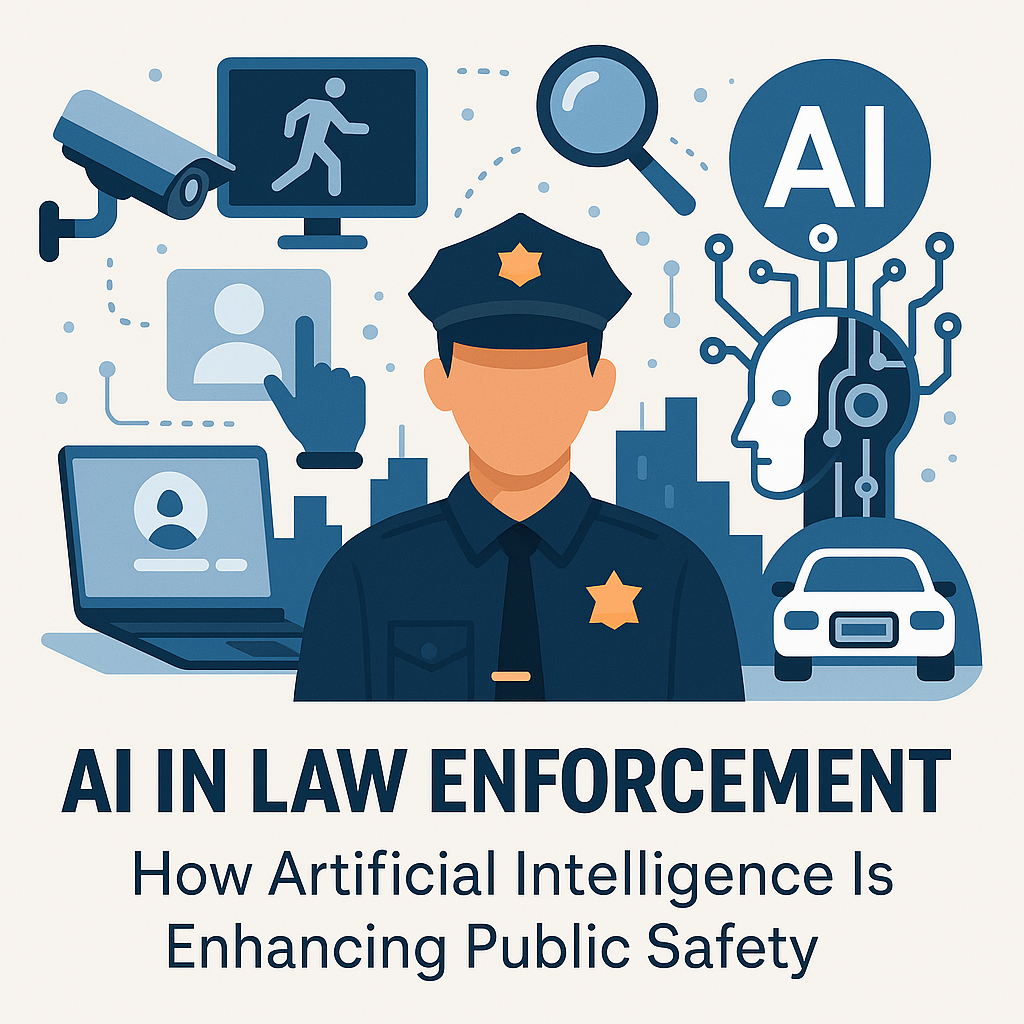
Artificial Intelligence is becoming a powerful tool in modern law enforcement.
With the ability to analyze massive datasets, detect patterns, and predict threats, AI supports safer communities and more efficient policing.
Here’s how AI is transforming public safety around the world.
👮♂️ 1. Predictive Policing
AI analyzes crime data to identify:
-
high-risk locations
-
potential criminal patterns
-
times with increased activity
-
repeat-offender behavior
This helps law enforcement allocate resources more efficiently.
🎥 2. Smart Surveillance Systems
AI enhances video surveillance by detecting:
-
suspicious movements
-
abandoned objects
-
unauthorized access
-
unusual crowd behavior
Security teams receive instant alerts, reducing response time.
🧠 3. Facial Recognition Technology
AI can identify individuals by analyzing:
-
facial features
-
movement patterns
-
biometric markers
This is used for missing persons, border security, and criminal investigations (under strict regulations).
🚔 4. License Plate Recognition
AI-powered cameras capture and analyze:
-
stolen vehicles
-
expired registrations
-
suspect movement routes
Traffic enforcement becomes faster and more accurate.
📱 5. Digital Evidence Analysis
AI helps investigators analyze:
-
phone data
-
social media activity
-
geolocation records
-
communication patterns
This accelerates case resolution and uncovers hidden connections.
🧬 6. Cybercrime Detection
AI identifies digital threats such as:
-
phishing attacks
-
online fraud
-
data breaches
-
identity theft
Cyber units rely heavily on AI to protect public and private systems.
🐾 7. Search and Rescue Enhancement
AI assists with rescues by:
-
scanning drone footage
-
detecting heat signatures
-
predicting movement patterns
Lives are saved with faster, more accurate detection.
📊 8. Behavioral Analysis
AI analyzes behaviors to detect:
-
aggression signals
-
insider threats
-
suspicious activity online
-
radicalization patterns
This supports early intervention and prevention.
📚 9. Streamlining Administrative Tasks
AI automates:
-
report writing
-
data entry
-
case classification
-
documentation
Officers spend more time in the field and less on paperwork.
⚠️ 10. Ethical and Legal Considerations
AI in law enforcement must address:
-
privacy rights
-
potential bias
-
transparency
-
accountability
-
regulatory compliance
Responsible use is crucial for maintaining public trust.
🔮 Conclusion: AI Is Enhancing Public Safety Responsibly
Artificial Intelligence is strengthening law enforcement by increasing efficiency, accuracy, and proactive prevention.
The future of public safety will be:
-
data-driven
-
predictive
-
transparent
-
efficient
-
deeply AI-powered
Just as StyonArt.com uses AI for creative innovation, AI in law enforcement enhances society’s ability to stay safe and secure.