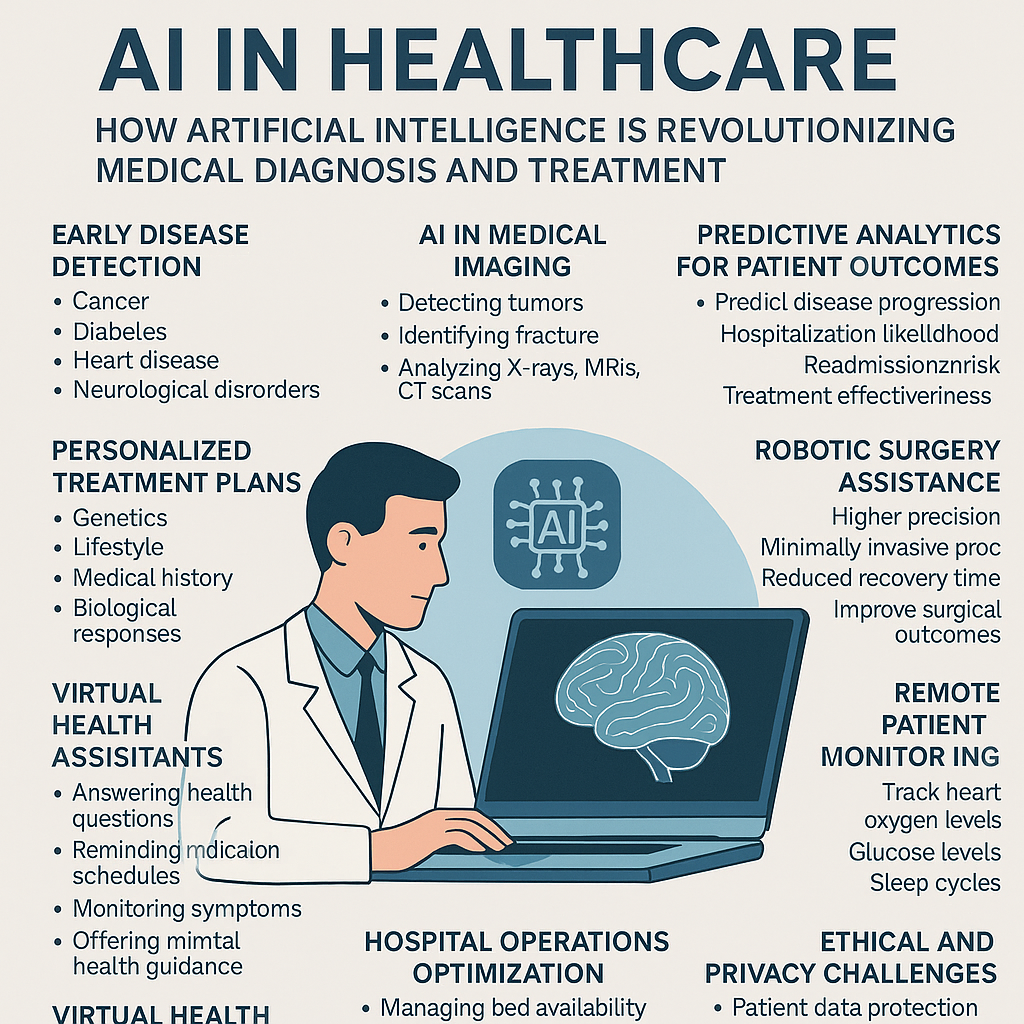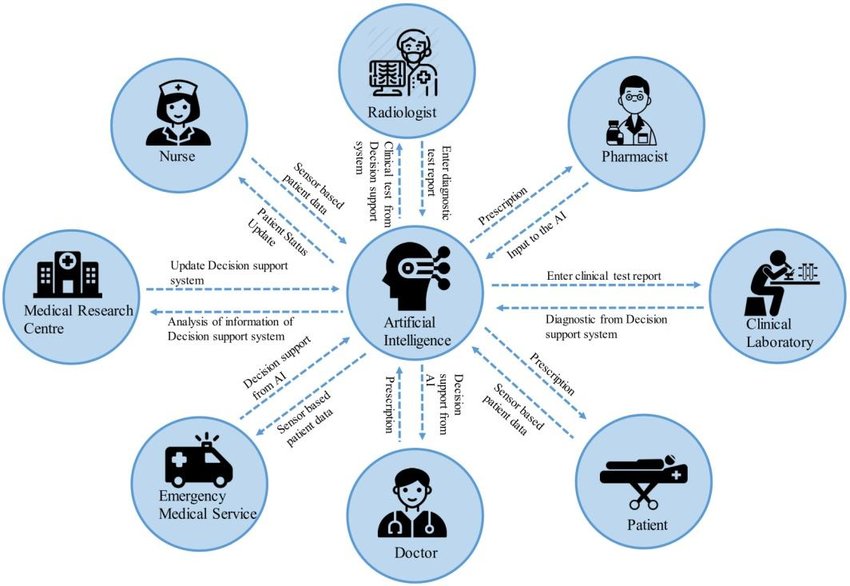
Artificial Intelligence is dramatically transforming the world of medical diagnostics.
AI systems are now capable of detecting diseases earlier, analyzing medical images with extraordinary accuracy, and supporting doctors in making life-saving decisions.
Here’s how AI is revolutionizing diagnostics in healthcare.
🩺 1. Early Disease Detection
AI identifies early warning signs of diseases such as:
-
cancer
-
heart disease
-
diabetes
-
neurological disorders
-
infectious diseases
This enables treatment long before symptoms become severe.
🖥️ 2. Advanced Medical Imaging Analysis
AI outperforms humans in analyzing:
-
X-rays
-
MRIs
-
CT scans
-
ultrasounds
-
pathology slides
It detects abnormalities that are often invisible to the human eye.
🧠 3. AI for Cancer Diagnostics
AI can identify:
-
tumors
-
cell irregularities
-
genetic markers
-
metastatic growth
This leads to earlier diagnosis and higher survival rates.
❤️ 4. Cardiovascular Diagnostics
AI predicts:
-
heart attack risks
-
arrhythmia patterns
-
blood flow issues
-
cardiac abnormalities
This supports cardiologists with more accurate and faster assessments.
🧬 5. Genomic and Personalized Medicine
AI analyzes DNA patterns to detect:
-
hereditary diseases
-
genetic mutations
-
personalized treatment options
-
medication response predictions
Medicine becomes tailored to each individual.
🤖 6. Diagnostic Chatbots and Pre-Screening
AI chatbots assist patients by:
-
identifying symptoms
-
suggesting next steps
-
recommending specialists
-
providing medical information
These tools reduce unnecessary hospital visits and waiting times.
🔬 7. Laboratory Automation
AI automates lab processes such as:
-
blood test analysis
-
sample classification
-
anomaly detection
-
data entry
This increases speed, accuracy, and reliability.
📊 8. Predictive Analytics for Patient Health
AI predicts:
-
worsening conditions
-
hospitalization risk
-
treatment outcomes
-
disease progression
Doctors can intervene earlier and more effectively.
🛡️ 9. Reducing Diagnostic Errors
AI supports doctors by:
-
cross-checking results
-
eliminating human bias
-
reducing fatigue-related mistakes
-
offering decision support
Patients receive more accurate and consistent diagnoses.
⚠️ 10. Ethical and Regulatory Challenges
AI in diagnostics must address:
-
patient data privacy
-
clinical transparency
-
algorithmic fairness
-
regulatory approval
Responsible AI saves lives.
🔮 Conclusion: AI Is Transforming the Future of Medical Diagnostics
Artificial Intelligence is reshaping how diseases are detected, analyzed, and treated.
It empowers doctors, accelerates research, and significantly improves patient outcomes.
The future of diagnostics will be:
-
faster
-
more precise
-
personalized
-
predictive
-
deeply AI-powered
Just as StyonArt.com uses AI to enhance digital creativity, AI transforms healthcare by enhancing the power of medical professionals.