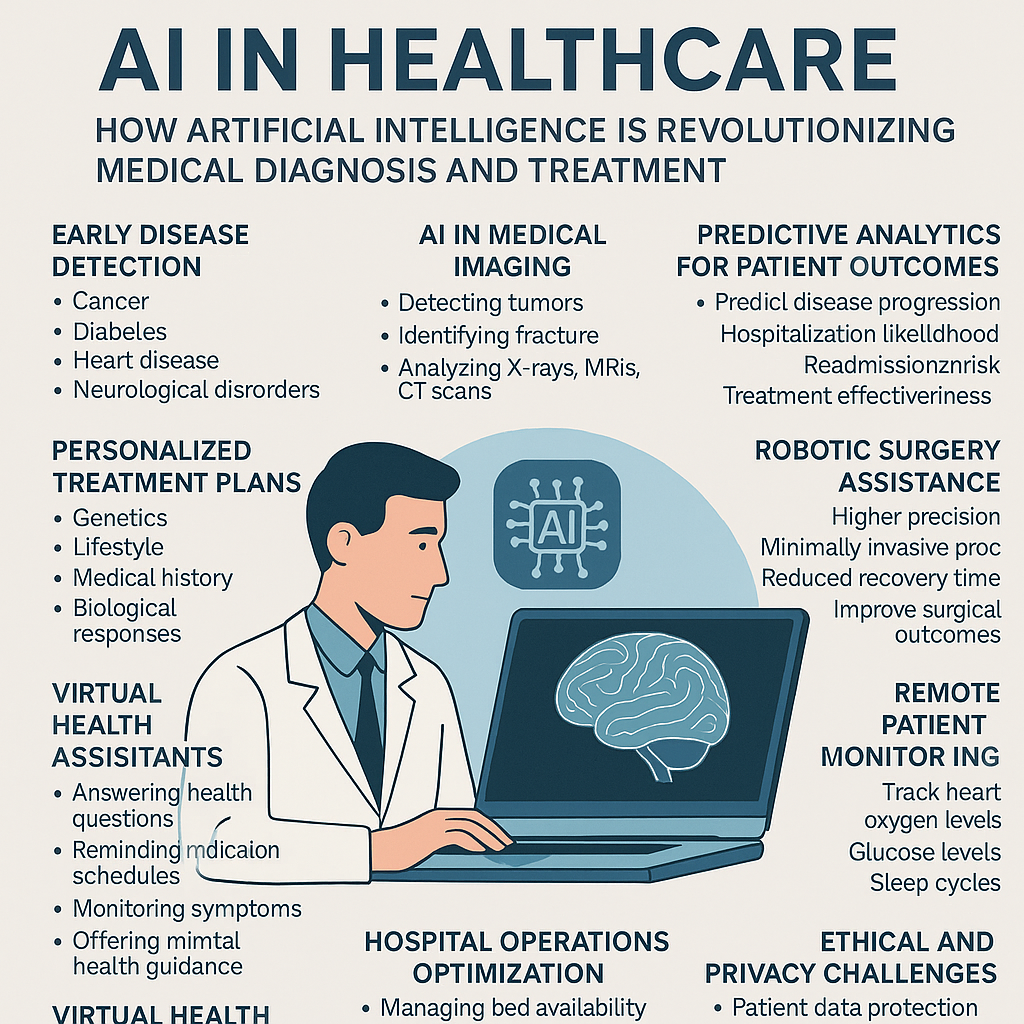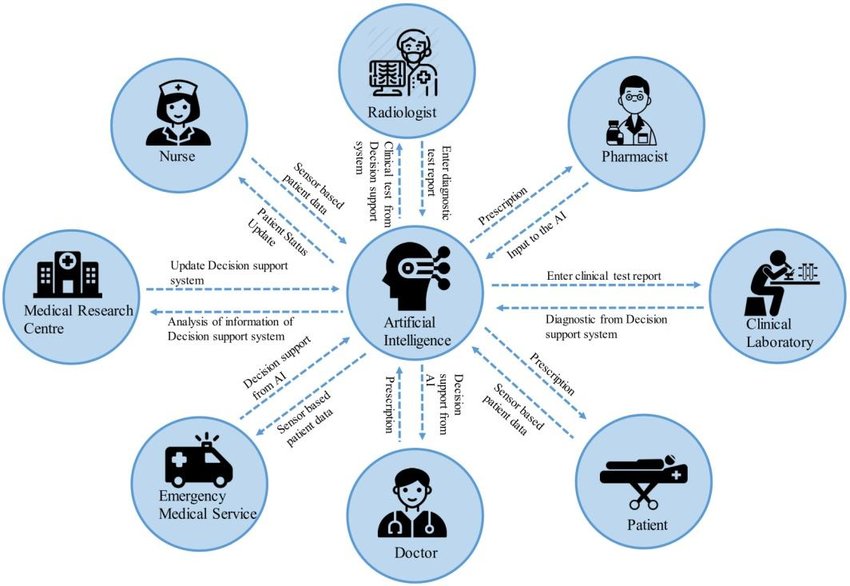
Artificial Intelligence is transforming healthcare at a pace never seen before.
From early disease detection to personalized treatments and robotic surgeries, AI is reshaping how doctors diagnose, treat, and monitor patients.
The result: faster care, improved accuracy, reduced costs, and better outcomes for millions of people.
Here is how AI is revolutionizing modern medicine.
🧠 1. Early Diagnosis and Disease Detection
AI excels at pattern recognition — especially in medical imaging.
AI systems now outperform humans in detecting:
-
cancer (breast, skin, lung)
-
heart diseases
-
neurological disorders
-
diabetic retinopathy
-
early-stage tumors that are invisible to the human eye
By analyzing thousands of medical images instantly, AI enables earlier and more accurate diagnosis.
📊 2. Predictive Analytics for Better Treatment
AI can analyze a patient’s history, genetics, and lifestyle to predict:
-
disease risks
-
treatment success rates
-
potential complications
-
ideal medication combinations
This leads to more personalized and effective medical care.
🤖 3. Robotic-Assisted Surgeries
AI-powered surgical robots increase precision and reduce complications.
Benefits include:
-
smaller incisions
-
reduced bleeding
-
faster recovery
-
higher accuracy
-
fewer human errors
Doctors remain in control, while AI improves precision and stability.
🧬 4. Personalized Medicine
By analyzing genetic information, AI helps doctors create treatments tailored to each patient.
This is especially powerful in:
-
cancer therapy
-
rare diseases
-
genetic disorders
-
chronic illness management
AI enables medicine that adapts to the individual, not the other way around.
🏥 5. AI in Hospital Administration
AI optimizes hospital operations behind the scenes:
-
automating patient scheduling
-
predicting bed availability
-
improving emergency room flow
-
reducing paperwork
-
managing supply chains
This frees medical staff to focus on what matters most: patient care.
☎️ 6. Virtual Health Assistants
AI chatbots and virtual health assistants provide 24/7 medical support.
They can:
-
answer health questions
-
monitor symptoms
-
remind patients to take medication
-
track recovery progress
-
help with chronic disease management
This improves patient engagement and reduces hospital visits.
🧪 7. Faster Drug Discovery
Developing new medicines traditionally takes years.
With AI, researchers can:
-
analyze chemical structures
-
predict drug effectiveness
-
simulate clinical results
-
identify side effects
This accelerates innovation and reduces costs dramatically.
⚠️ 8. Ethical and Privacy Challenges
Despite its benefits, AI in healthcare raises important concerns:
-
patient data privacy
-
algorithmic bias
-
decision transparency
-
responsibility for AI-based errors
Strong ethical frameworks are essential to ensure safe and fair medical AI systems.
🔮 Conclusion: The Future of Healthcare Is AI-Enhanced
Artificial Intelligence is redefining healthcare from diagnosis to recovery.
It empowers doctors, supports patients, and unlocks breakthroughs that were once impossible.
AI does not replace human expertise — it enhances it.
And as technology continues to advance, we are moving toward a world where healthcare is:
-
more precise
-
more accessible
-
more predictive
-
more personalized
Platforms like StyonArt.com show that AI can improve quality of life not only medically, but creatively and emotionally as well.