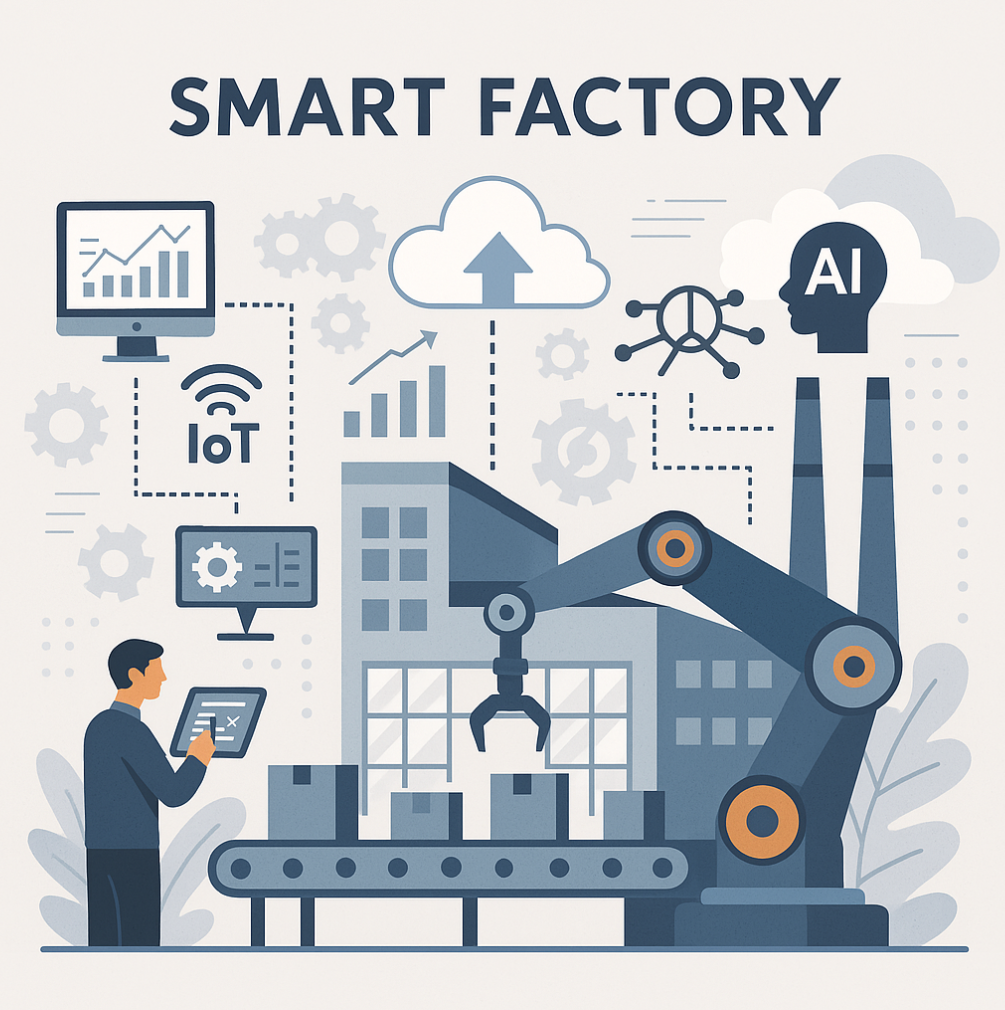
Artificial Intelligence is revolutionizing manufacturing, making production processes faster, smarter, and more efficient.
From predictive maintenance to automation and quality control, AI empowers manufacturers to deliver results that are innovative and cost-effective.
Here’s how AI is transforming modern manufacturing.
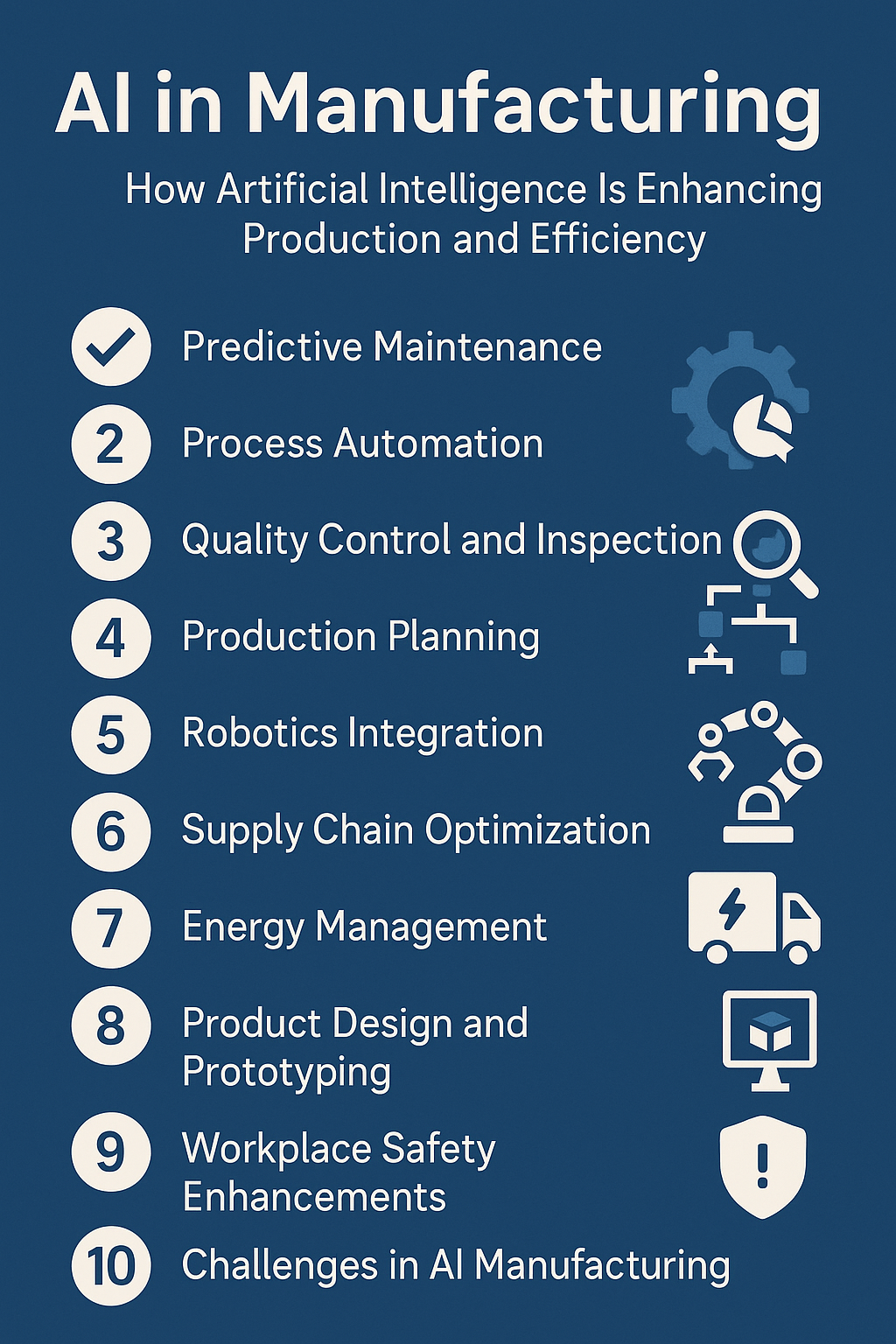
🔧 1. Predictive Maintenance
AI predicts machine failures by analyzing:
-
sensor data
-
performance metrics
-
historical wear patterns
-
maintenance logs
This reduces downtime and extends equipment lifespan.
⚙️ 2. Process Automation
AI automates repetitive tasks such as:
-
material handling
-
equipment calibration
-
program code generation
-
component assembly
Automation minimizes errors and speeds production.
🔍 3. Quality Control and Inspection
AI enhances product quality by:
-
identifying defects
-
analyzing images
-
detecting anomalies
-
inspecting products in real time
This ensures consistent standards across production lines.
📊 4. Production Planning
AI forecasts demand and inventory needs to:
-
optimize production schedules
-
reduce bottlenecks
-
balance workloads
-
improve resource allocation
Manufacturing becomes more predictable and efficient.
🤖 5. Robotics Integration
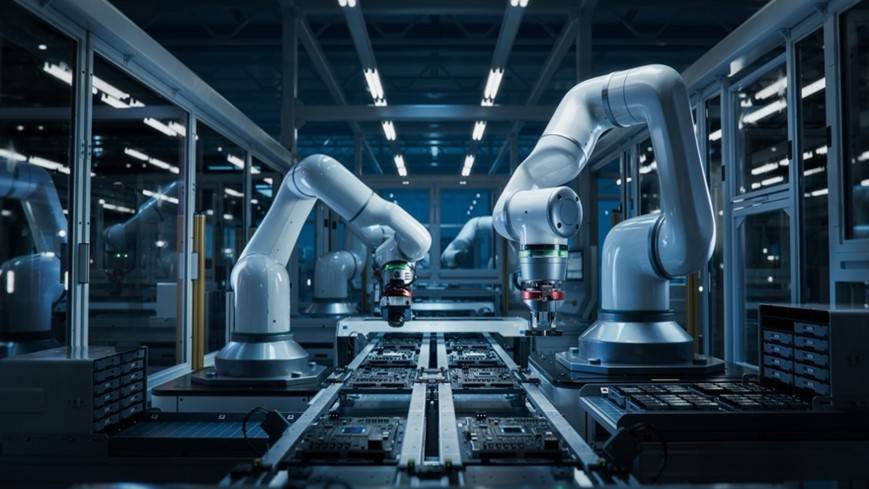
AI-powered robots assist in:
-
welding
-
assembly
-
packaging
-
material processing
These robots work safely and precisely, boosting output.
🚚 6. Supply Chain Optimization
AI improves supply chain flow through:
-
demand prediction
-
inventory forecasting
-
supplier risk analysis
-
delivery route optimization
Organizations reduce waste and improve delivery performance.
🔋 7. Energy Management
AI optimizes energy use by:
-
analyzing consumption patterns
-
reducing emissions
-
cutting operational power costs
Factories lower expenses while reducing environmental impact.
🧪 8. Product Design and Prototyping
AI accelerates innovation by:
-
generating design alternatives
-
predicting performance outcomes
-
automating prototyping simulations
This shortens development cycles and boosts creativity.
🛡️ 9. Workplace Safety Enhancements
AI improves safety by:
-
monitoring equipment behavior
-
detecting hazards
-
analyzing worker movements
-
preventing accidents
Work environments become more secure and efficient.
⚠️ 10. Challenges in AI Manufacturing
Key challenges include:
-
high system implementation costs
-
workforce training needs
-
integrating legacy equipment
-
data security concerns
A strategic approach is essential for successful adoption.
🔮 Conclusion: AI Is Shaping the Future of Manufacturing
Artificial Intelligence is transforming manufacturing into a more automated, efficient, and innovative sector.
The future of manufacturing will be:
-
predictive
-
automated
-
energy-efficient
-
safer
-
deeply AI-powered
Just as StyonArt.com uses AI to unleash creativity, AI in manufacturing unlocks smarter, more productive industrial systems.