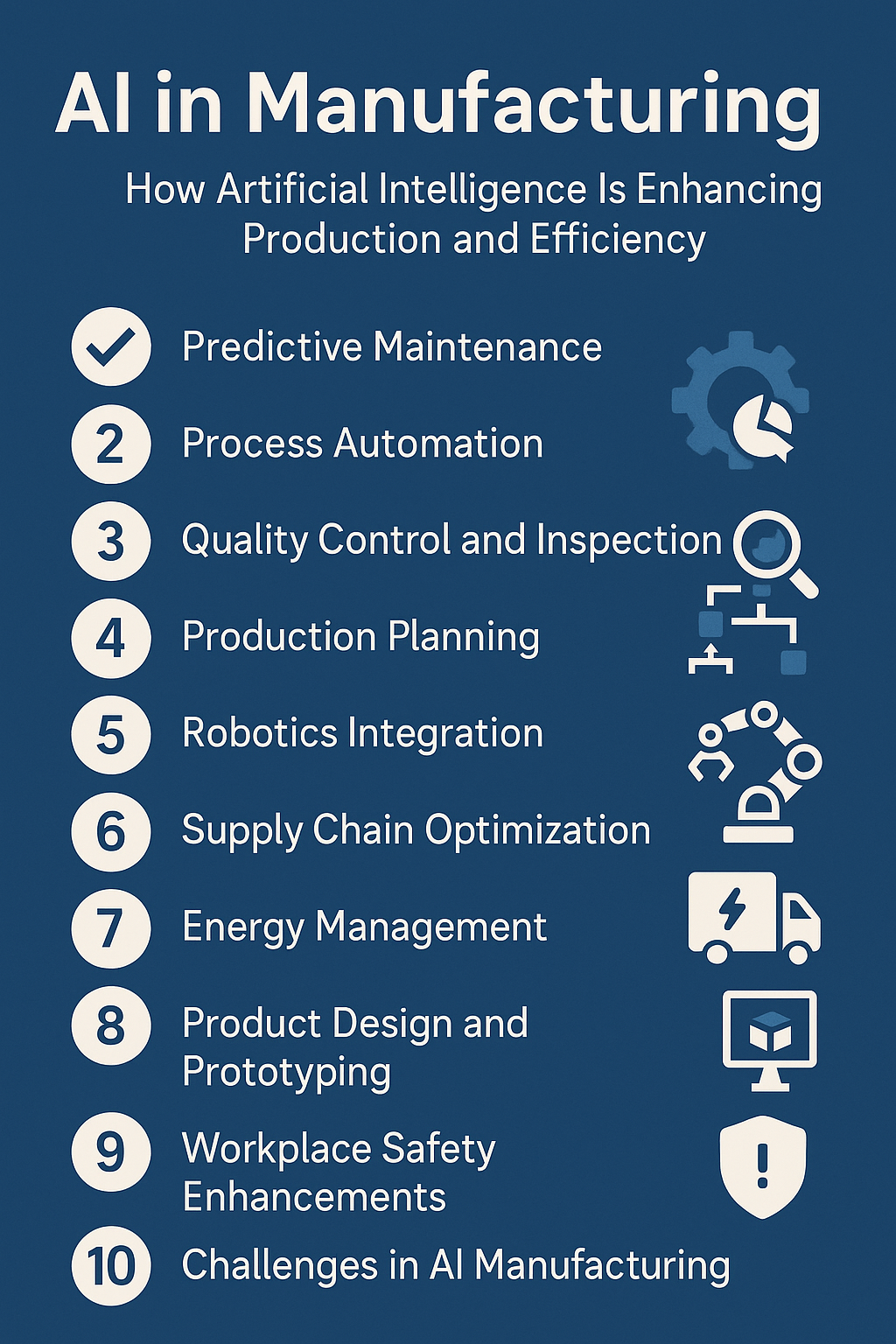
Manufacturing is entering a new era — the AI-powered Industrial Revolution.
Artificial Intelligence is transforming factories, improving efficiency, reducing waste, and enabling smarter production processes than ever before.
Here’s how AI is reshaping global manufacturing.
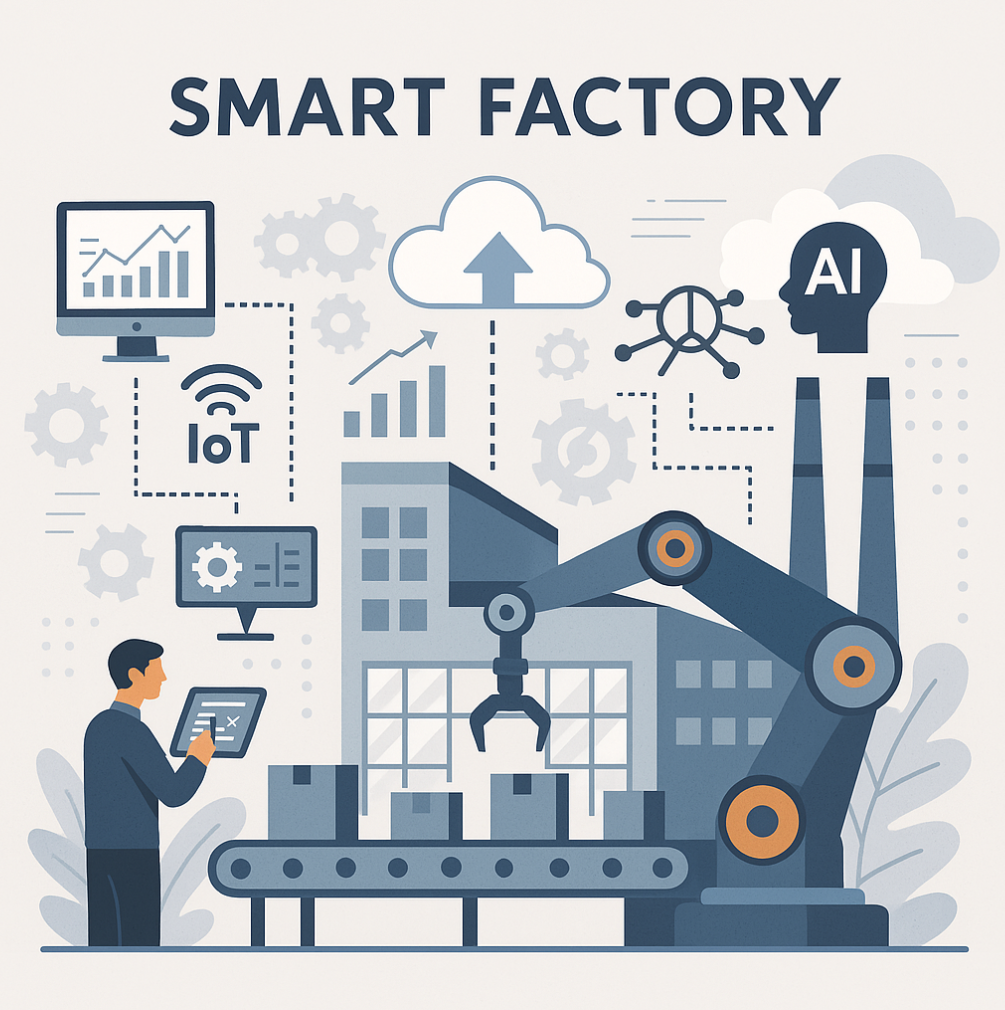
🏭 1. Smart Factories and Automation
AI powers fully connected factories where machines:
-
communicate with each other
-
adjust production in real time
-
detect inefficiencies
-
optimize energy usage
-
automate repetitive work
This leads to higher productivity and lower costs.
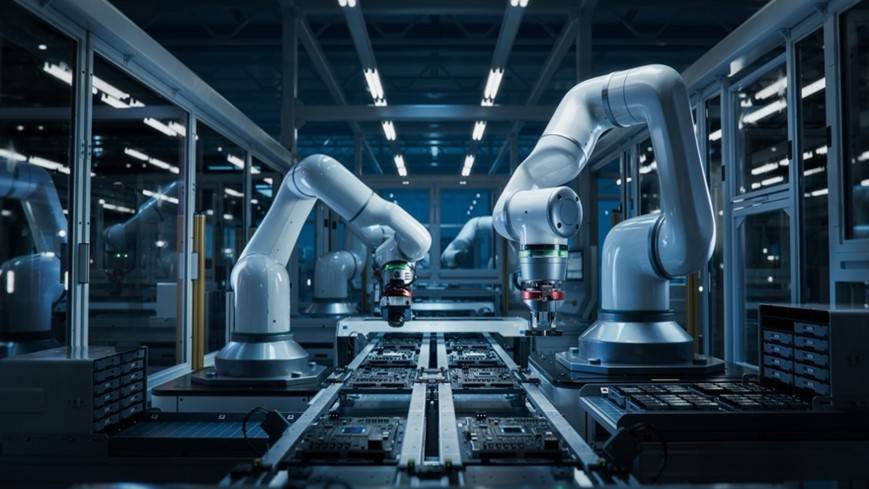
🤖 2. Robotics and Autonomous Machines
AI-driven robots can:
-
assemble products
-
weld, paint, and package
-
handle dangerous tasks
-
inspect components
-
adapt to new workflows
Robots are no longer just tools — they’re intelligent collaborators.
📊 3. Predictive Maintenance
AI predicts machine failures before they happen by analyzing:
-
vibration patterns
-
sensor data
-
temperature changes
-
operational history
This prevents breakdowns and saves millions in repairs.
🔍 4. Quality Control Powered by AI
Using computer vision, AI detects defects with exceptional accuracy:
-
surface imperfections
-
misaligned components
-
product inconsistencies
-
manufacturing errors
AI ensures consistent, high-quality output.
🧠 5. Production Optimization
AI analyzes production data to improve:
-
manufacturing speed
-
material usage
-
workflow sequencing
-
staffing efficiency
-
energy consumption
Factories become smarter and more sustainable.
🛠️ 6. Supply Chain Precision
AI enhances supply chain performance by predicting:
-
material demands
-
delivery delays
-
inventory shortages
-
transportation risks
Manufacturers operate with fewer disruptions.
🧾 7. Cost Reduction Through Automation
AI reduces operational expenses by automating:
-
labor-intensive tasks
-
repetitive actions
-
administrative work
-
reporting and data entry
More output for less cost.
🌱 8. Environmental Sustainability
AI supports green manufacturing by optimizing:
-
waste management
-
energy efficiency
-
emissions reduction
-
resource usage
Factories contribute to a cleaner planet.
🧬 9. Human-AI Collaboration
AI helps workers by:
-
offering guidance
-
reducing physical strain
-
automating dangerous jobs
-
improving decision-making
Humans remain essential — AI enhances their capabilities.
⚠️ 10. Ethical and Operational Challenges
Manufacturers must address:
-
job displacement
-
data security
-
system reliability
-
ethical robotics deployment
Balanced, responsible AI adoption is key.
🔮 Conclusion: AI Is Driving the Industrial Revolution 4.0
Artificial Intelligence is transforming manufacturing into a smarter, safer, and more efficient ecosystem.
The factories of the future will be:
-
automated
-
connected
-
data-driven
-
eco-friendly
-
deeply AI-powered
Just as StyonArt.com uses AI to accelerate creativity, AI is accelerating industrial innovation worldwide.