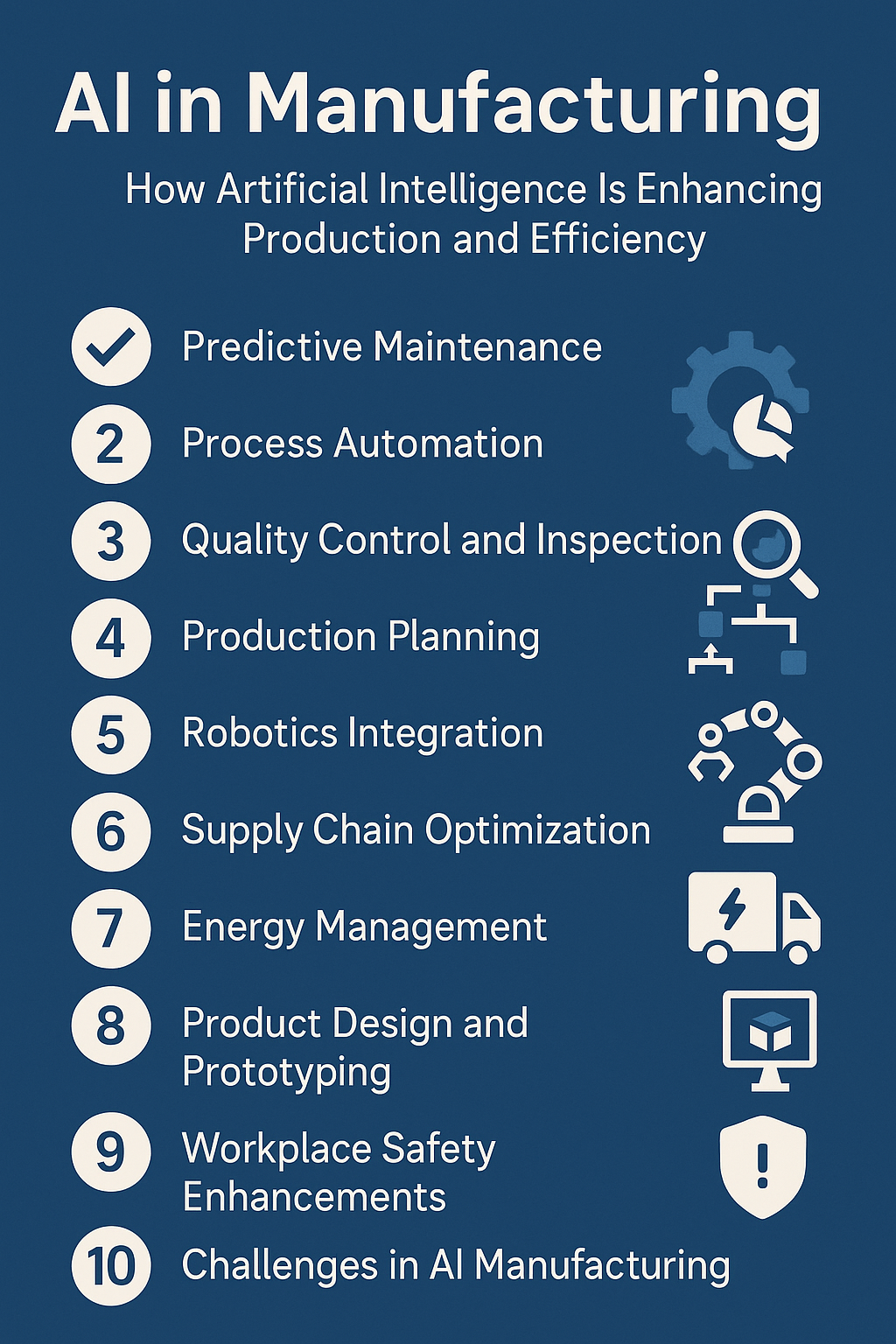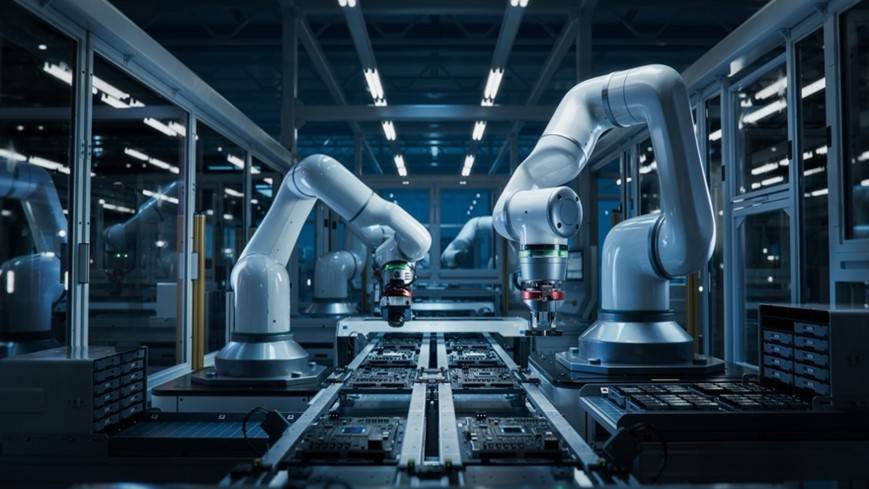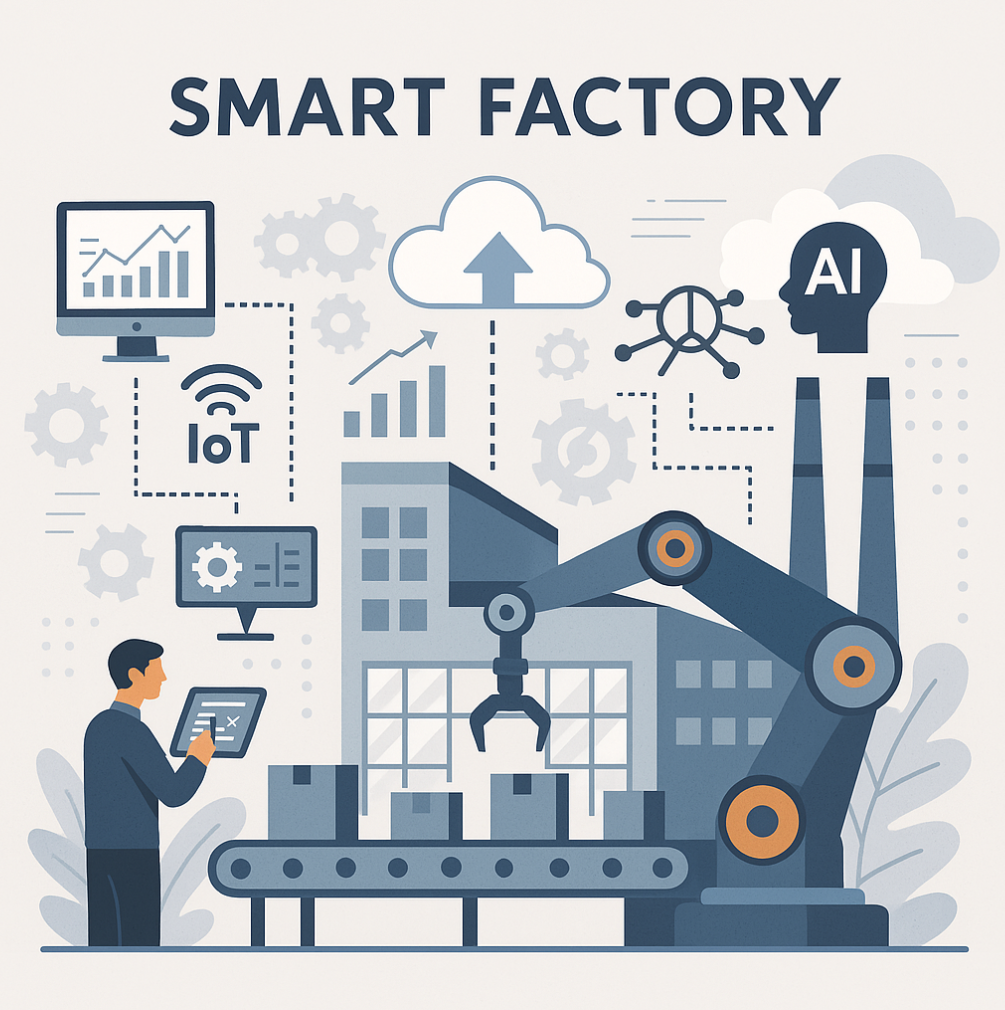
Artificial Intelligence is reshaping manufacturing at incredible speed.
Factories are becoming smarter, production is more efficient, and human–machine collaboration is stronger than ever.
AI-powered manufacturing — also known as Industry 4.0 — is building the foundation of the modern industrial world.
Here is how AI is transforming global manufacturing.
🏭 1. Smart Factories and Automation
AI enables factories to operate with unprecedented efficiency.
AI-powered automation manages:
-
assembly lines
-
packaging
-
material handling
-
machine coordination
-
quality checks
These systems reduce human error and increase output.
🔍 2. Quality Control with Computer Vision
AI uses advanced image recognition to detect defects in real time.
It identifies:
-
cracks
-
misalignments
-
texture issues
-
shape abnormalities
-
faulty components
This improves product quality and reduces waste significantly.
🔧 3. Predictive Maintenance
Instead of waiting for machines to break, AI predicts problems early.
AI monitors:
-
vibrations
-
heat levels
-
noise frequency
-
lubrication needs
-
tool wear
This reduces downtime, extends equipment life, and saves costs.
📦 4. Supply Chain Optimization
AI analyzes global data to optimize supply chain operations.
AI improves:
-
inventory forecasting
-
delivery route planning
-
warehouse organization
-
supplier risk analysis
-
demand prediction
This helps manufacturers stay competitive even in volatile markets.
🤖 5. Collaborative Robots (Cobots)
Cobots work safely alongside humans to handle repetitive or heavy tasks.
They assist with:
-
assembly
-
welding
-
painting
-
packaging
-
precision tasks
Cobots increase workplace safety and efficiency.
📊 6. Real-Time Data and Process Monitoring
AI collects and analyzes data from sensors across the factory floor.
This allows businesses to:
-
track performance
-
eliminate bottlenecks
-
optimize production speed
-
reduce energy consumption
-
implement continuous improvement
Manufacturers gain a complete and intelligent overview of operations.
🧠 7. AI in Product Design and Prototyping
AI accelerates innovation by creating smart product designs.
It can:
-
simulate performance
-
test materials
-
predict failure points
-
generate 3D models
-
optimize shapes
This shortens development cycles and speeds up time-to-market.
🌱 8. Sustainable Manufacturing
AI helps factories reduce environmental impact through:
-
energy optimization
-
waste reduction
-
efficient resource planning
-
lower emissions
Green manufacturing becomes easier, smarter, and more cost-effective.
⚠️ 9. Challenges and Considerations
Despite its benefits, AI in manufacturing involves challenges:
-
high initial investment
-
need for skilled workers
-
cybersecurity concerns
-
integration with legacy systems
-
data privacy
Proper strategy and training are essential.
🔮 Conclusion: The Future of Manufacturing Is AI-Driven
Artificial Intelligence is powering the next industrial revolution.
Factories of the future will be:
-
fully connected
-
highly automated
-
sustainable
-
efficient
-
intelligent
AI doesn't replace workers — it empowers them to focus on creativity, strategy, and innovation.
Platforms like StyonArt.com show how AI enhances creativity and production workflows across multiple industries, including manufacturing.