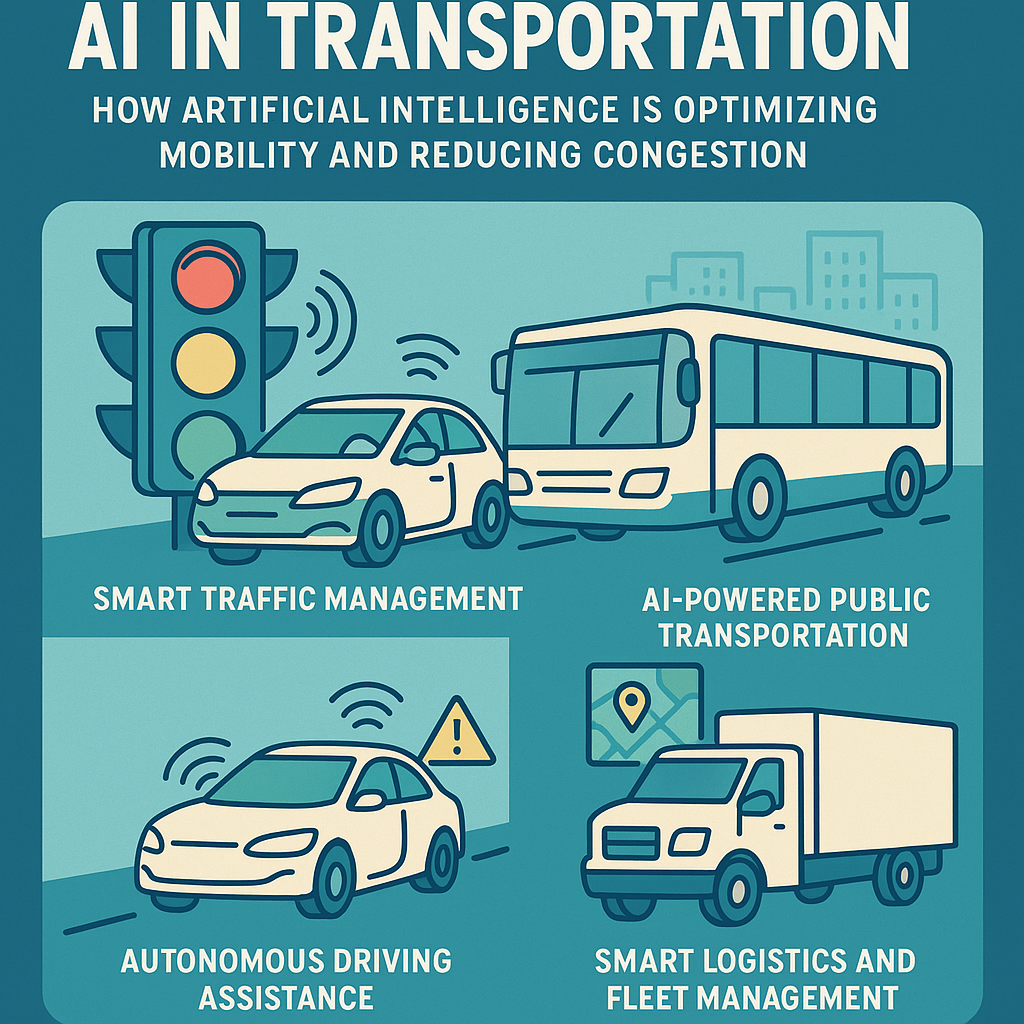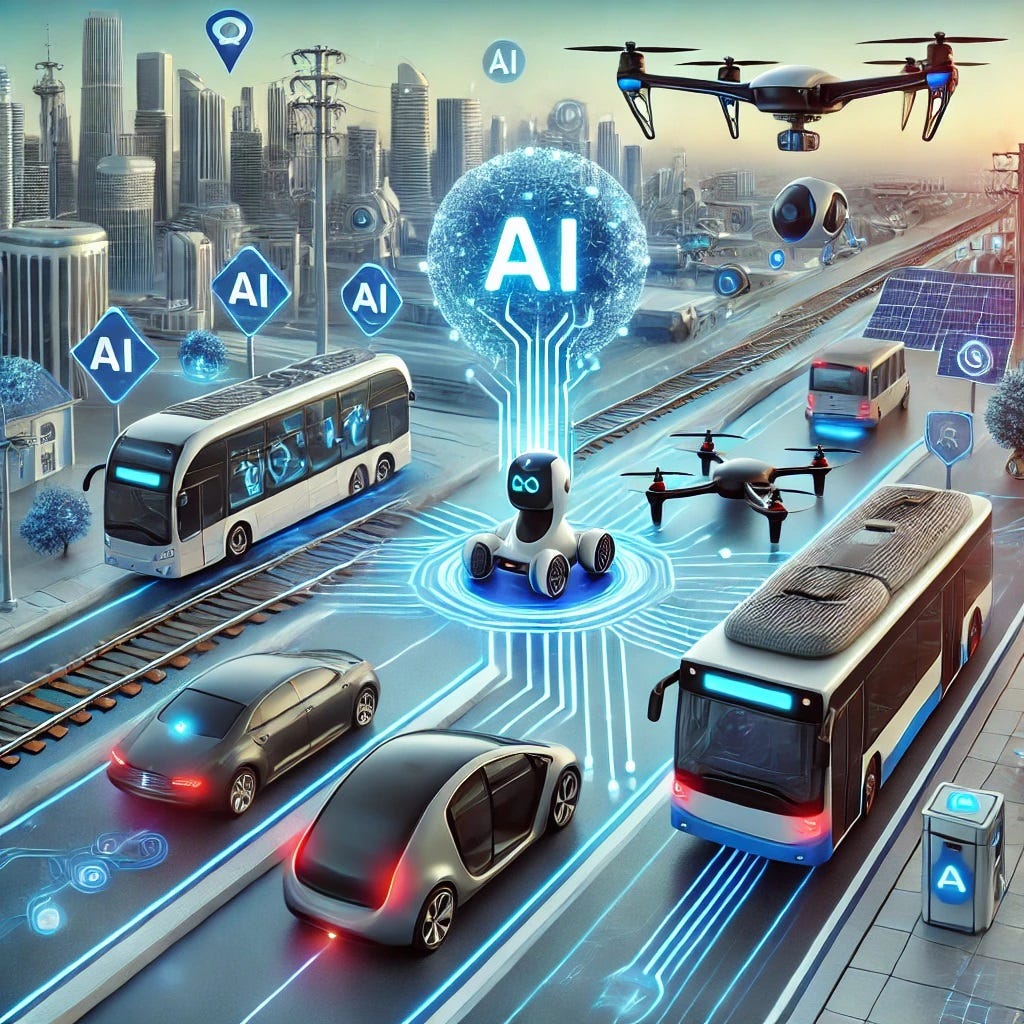
Artificial Intelligence is revolutionizing transportation at all levels — from self-driving vehicles to predictive traffic control and smart city planning.
As mobility becomes more automated and connected, AI helps reduce congestion, improve safety, and create efficient urban environments.
Here’s how AI is reshaping the future of transportation.
🚗 1. Autonomous Vehicles
Self-driving cars use AI to process:
-
road conditions
-
traffic signs
-
pedestrian movement
-
vehicle behavior
-
real-time environment changes
AI allows vehicles to navigate safely and make split-second decisions.
🚦 2. Smart Traffic Management
AI optimizes road traffic by analyzing:
-
congestion patterns
-
weather data
-
accidents
-
peak travel times
-
public transit flow
Cities reduce traffic jams, pollution, and travel time.
🚍 3. AI in Public Transportation
AI enhances public transport through:
-
optimized routes
-
demand prediction
-
real-time passenger updates
-
automated scheduling
-
smart ticketing
Public transit becomes more reliable and user-friendly.
🚚 4. Logistics and Freight Automation
AI improves transportation and logistics by optimizing:
-
delivery routes
-
fleet maintenance
-
cargo tracking
-
fuel efficiency
-
warehouse coordination
Goods move faster and more efficiently across global networks.
🛣️ 5. Infrastructure and Smart Roads
AI helps maintain infrastructure by monitoring:
-
road wear
-
bridge stability
-
traffic density
-
structural weaknesses
Predictive maintenance prevents accidents and reduces repair costs.
🛫 6. AI in Aviation
AI supports aviation by enhancing:
-
flight route optimization
-
predictive maintenance
-
safety monitoring
-
air traffic control
-
customer service automation
The aviation industry becomes safer and more efficient.
🚢 7. Maritime Transportation
AI assists ships and ports with:
-
autonomous navigation
-
cargo loading optimization
-
storm route prediction
-
fuel management
-
port traffic coordination
This increases safety and reduces operational costs.
🔋 8. Electric Vehicles and Energy Management
AI improves EV performance through:
-
battery optimization
-
smart charging schedules
-
range prediction
-
grid balancing
EVs become more sustainable and reliable.
🧭 9. Travel Experience Enhancement
AI enhances travel by offering:
-
personalized route suggestions
-
predictive delays
-
real-time alerts
-
smart navigation assistance
Travelers gain smoother, safer journeys.
⚠️ 10. Ethical and Safety Concerns
AI in transportation must address:
-
privacy in mobility data
-
autonomous vehicle liability
-
cybersecurity threats
-
safety regulations
Responsible AI ensures safe and fair use.
🔮 Conclusion: AI Is Driving the Future of Mobility
Artificial Intelligence is transforming mobility into a smarter, safer, and more sustainable experience.
The transportation systems of the future will be:
-
autonomous
-
connected
-
energy-efficient
-
environmentally friendly
-
deeply AI-powered
Just as StyonArt.com uses AI to empower creativity, AI in transportation empowers cities and travelers to move smarter and live better.