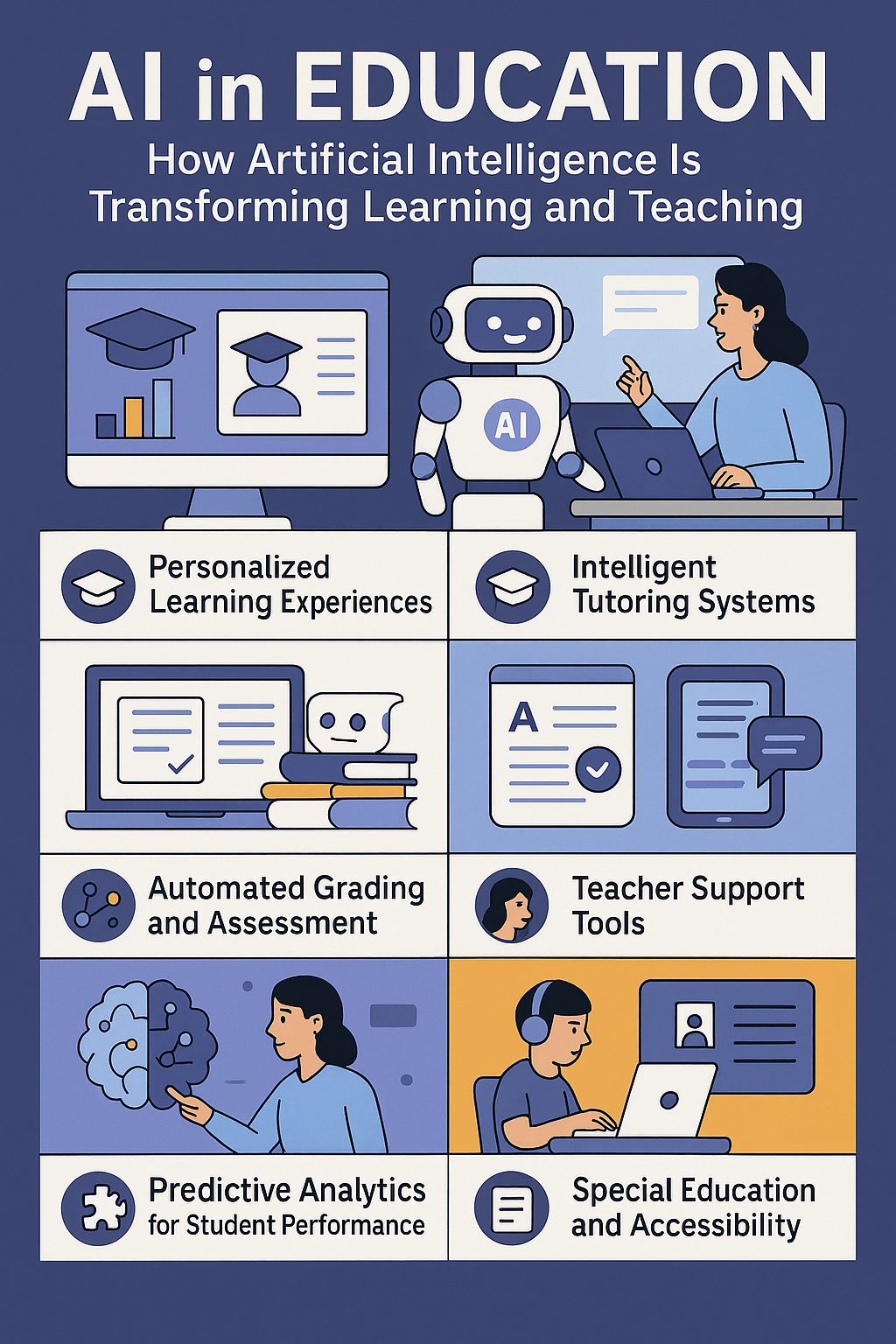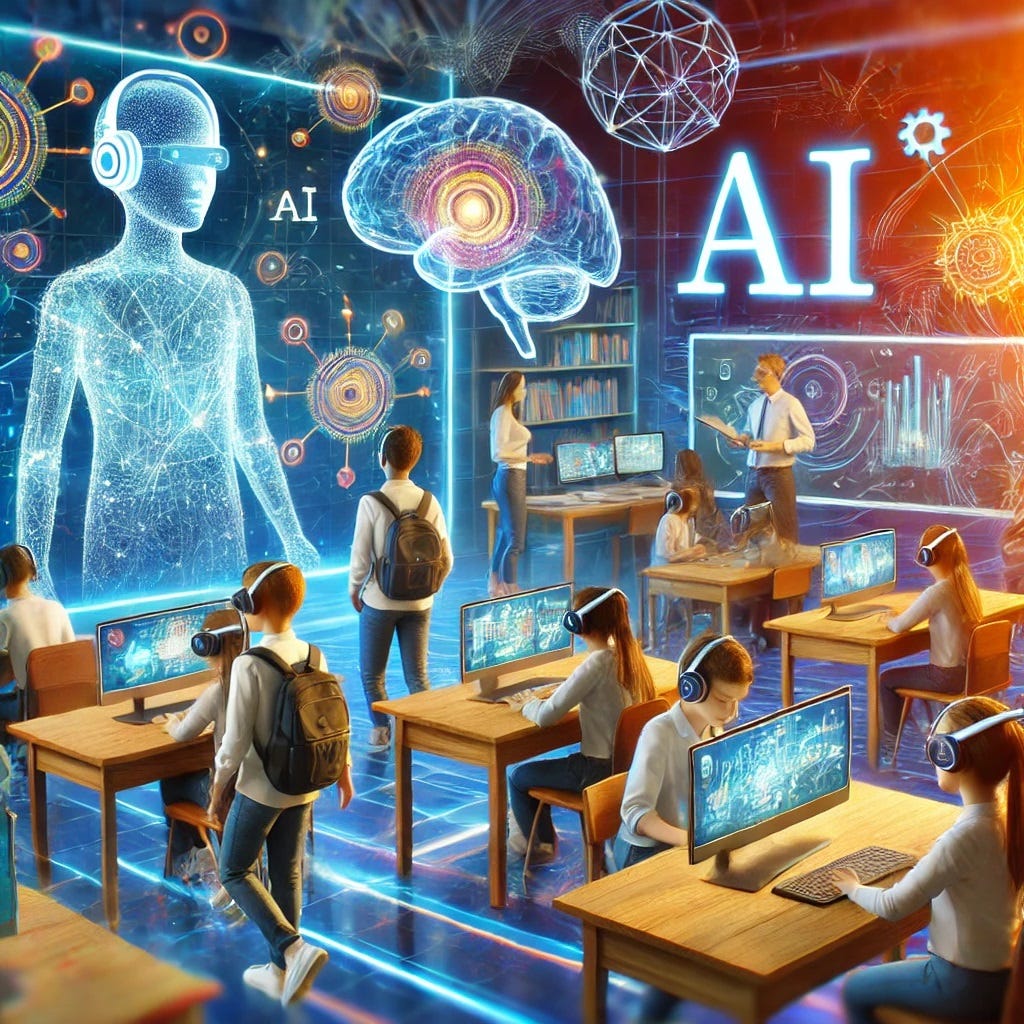
Artificial Intelligence is reshaping education in ways that were unimaginable just a decade ago.
From personalized learning paths to instant feedback, AI enables students and teachers to achieve more with less effort.
Education is moving from a one-size-fits-all approach to a dynamic, adaptive system where each learner progresses at their own pace.
Here is how AI is transforming the future of learning.
📚 1. Personalized Learning
AI systems analyze student performance and create individualized learning paths.
Instead of following the same lessons as the entire class, each student receives:
-
customized exercises
-
adaptive difficulty levels
-
targeted explanations
-
recommended study materials
This results in deeper understanding and improved academic outcomes.
🤖 2. Intelligent Tutoring Systems
AI-driven tutors are available 24/7, offering explanations and practice tailored to each student's needs.
These tools can:
-
answer complex questions
-
identify knowledge gaps
-
provide step-by-step guidance
-
simulate real teachers
Students no longer need to wait for classroom hours to receive help.
⏱️ 3. Automated Tasks for Teachers
AI reduces the administrative burden on teachers by automating:
-
grading
-
attendance tracking
-
content creation
-
exam generation
-
feedback reports
This frees teachers to focus on human-centered activities such as mentoring, creativity, and emotional support.
🌍 4. Global Access to Education
AI-powered platforms make education accessible to anyone with an internet connection.
Benefits include:
-
multilingual content
-
real-time translation
-
inclusive learning for people with disabilities
-
remote classrooms
-
affordable online courses
AI is democratizing education for millions around the world.
🎥 5. AI in Creative and Project-Based Learning
AI tools allow students to learn through creation rather than memorization.
They can generate:
-
presentations
-
images
-
videos
-
simulations
-
digital art
-
coding prototypes
Platforms like StyonArt.com show how AI can inspire creativity, allowing students to turn abstract ideas into visual concepts instantly.
🧠 6. Improved Assessment and Feedback
AI evaluates performance faster and more accurately than traditional testing.
It can:
-
detect patterns of misunderstanding
-
predict future performance
-
offer detailed corrective feedback
-
adjust lessons in real time
Students learn more effectively when feedback is immediate.
⚠️ 7. Challenges and Considerations
Despite the benefits, AI in education raises concerns:
-
data privacy
-
over-reliance on technology
-
reduced human interaction
-
unequal access to devices
-
potential bias in AI scoring
Responsible AI use and transparent policies are essential to maintaining fairness.
🔮 Conclusion: The Future of Education Is AI-Enhanced
Artificial Intelligence is not replacing teachers—it is empowering them.
AI creates a learning environment that is more adaptive, inclusive, and engaging than ever before.
Students gain confidence, teachers save time, and education becomes accessible to everyone.
The future classroom will be smart, global, and AI-driven—unlocking human potential on a scale never seen before.